Selecting a scaffolding system affects more than access on a construction site. The connection method, structural flexibility, erection process, and project requirements all influence productivity, safety, and overall project cost. For contractors, rental companies, and construction-support buyers evaluating scaffolding for sale, understanding the differences between ringlock, cuplock, and frame systems makes it easier to match equipment with actual site conditions.
Understanding the Main Types of Scaffolding Systems
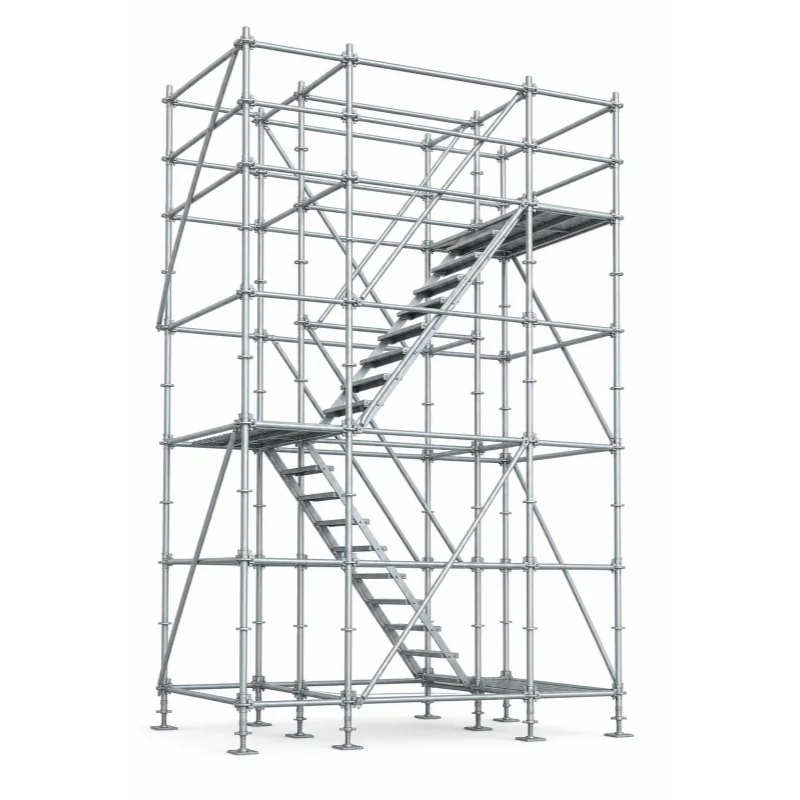
Ringlock, cuplock, and frame scaffolding are all modular approaches, but their structural configurations differ. Ringlock and cuplock use vertical standards with dedicated connection points, while frame scaffolding relies on prefabricated welded frames and bracing. OSHA identifies fabricated frame scaffolds as a common supported-scaffold type, while its guidance also emphasizes proper bracing, firm foundations, and secure connections for scaffold stability.
The right choice therefore depends on the project’s geometry, working levels, loading requirements, installation resources, and whether the scaffold must accommodate irregular structures. Buyers should evaluate the complete system rather than selecting equipment solely according to its purchase price.
Ringlock Scaffolding: Flexible for Complex Structures
Ringlock scaffolding uses rosette connection points welded to vertical standards. Ledgers, diagonal braces, and other components connect at these nodes, creating a modular structure that can be adapted to different elevations, layouts, and access requirements.
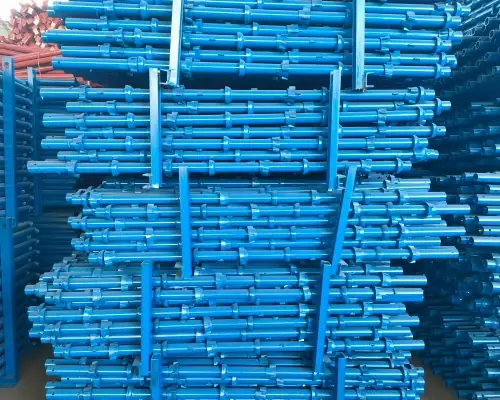
We manufacture our ringlock scaffolding from high-strength steel with precision welding and a hot-dip galvanized finish. This combination is intended to provide durability and corrosion resistance for demanding indoor and outdoor applications, including construction, industrial maintenance, infrastructure, and formwork support.
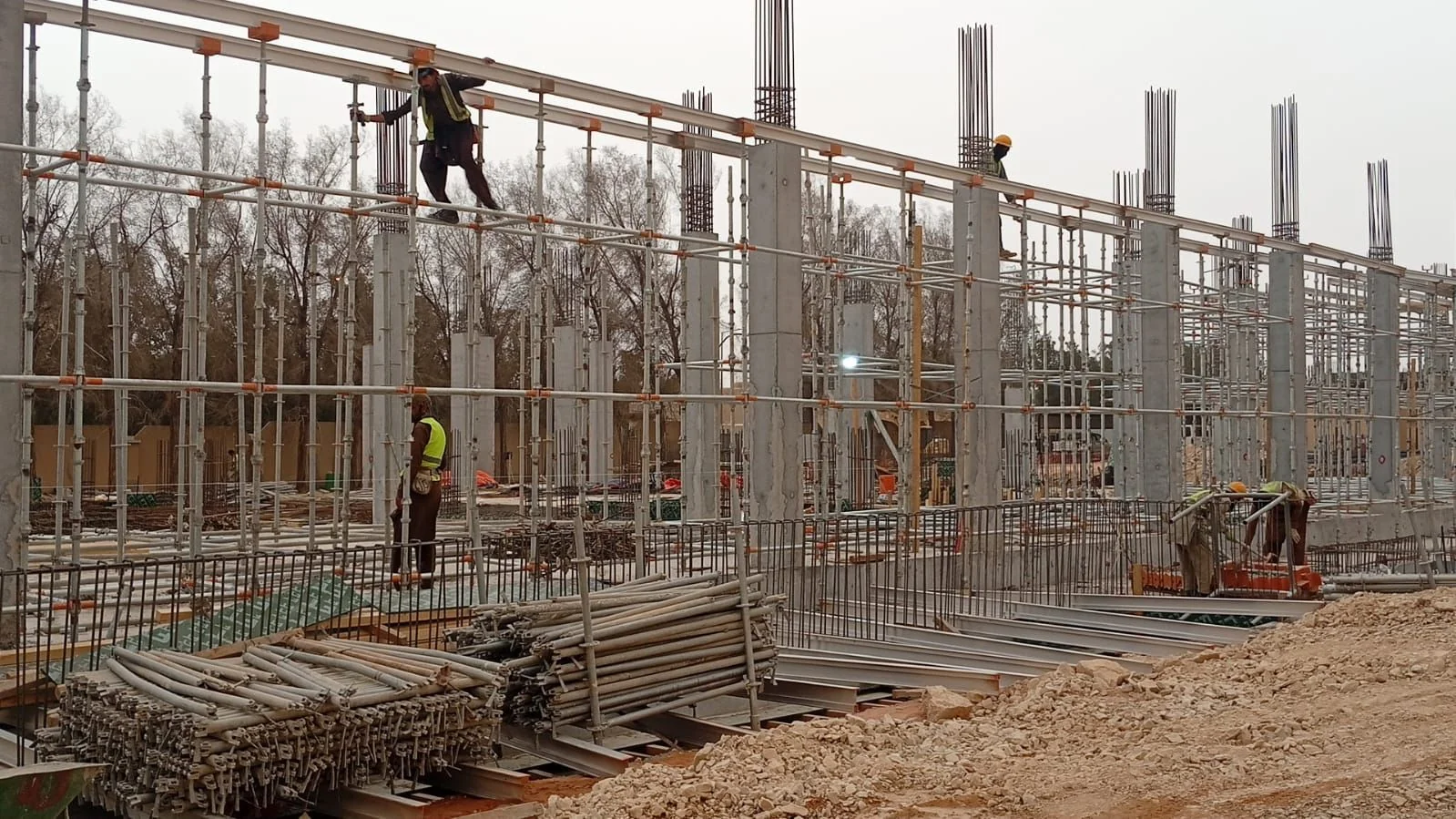
The rosette locking connection also supports fast assembly. Instead of relying on numerous conventional bolted connections, workers can connect compatible components directly at the node. For projects with changing elevations, complicated geometries, or substantial temporary support requirements, this modularity can be particularly useful.
Cuplock Scaffolding: Fast Node Connections
Cuplock scaffolding uses vertical standards fitted with fixed lower cups and sliding upper cups. Ledger blades are placed into the lower cup, after which the upper cup locks the connection. A single node can accommodate multiple horizontal members, which is one reason the system is widely used for access and support applications.
The system is especially attractive when contractors need repetitive erection and dismantling. Its standardized components can create access platforms, support structures, towers, and other configurations without requiring nuts and bolts at every ledger connection. However, the system still needs appropriate bracing, foundations, and design for the intended loads.
For buyers comparing types of scaffolding systems, cuplock can therefore be a practical option when rapid, repetitive assembly is a priority and the project can work efficiently with its predefined connection arrangement.
Frame Scaffolding: Simple and Familiar
Frame scaffolding is built around prefabricated end frames, platforms, and cross, horizontal, or diagonal braces. OSHA notes that fabricated frame scaffolds can be used in one or two tiers and can also be stacked for larger construction projects.
Its straightforward configuration makes frame scaffolding familiar to many contractors. It can be suitable for relatively regular façades, interior work, painting, plastering, and other applications where standardized frame dimensions fit the working area.
The trade-off is flexibility. Compared with node-based modular systems, fixed frame geometry can make unusual building shapes or complex temporary structures more difficult to accommodate. Proper bracing is also essential: OSHA requires frames and panels to be braced so that the erected scaffold remains plumb, level, and square.
How Should Contractors Compare Them?
Ringlock scaffolding is generally worth considering for complex projects that require flexible layouts, adjustable working levels, and the ability to connect multiple components at different angles. Cuplock scaffolding can be a practical choice for large-scale projects where fast assembly, repeated connection points, and efficient material handling are priorities.
Frame scaffolding may be more suitable for applications such as building maintenance, exterior finishing, and projects with consistent wall heights, where simple installation, standardized sizes, and easy relocation are key considerations. Each system serves different construction requirements and working conditions.
Cost should not be evaluated as equipment price alone. Contractors should also consider labor, transport, storage, erection and dismantling time, component compatibility, corrosion protection, and the expected number of reuse cycles. OSHA further states that scaffold components from different manufacturers should not be intermixed unless compatibility and structural integrity are maintained.
Making a Practical Scaffolding Investment
Choosing among these types of scaffolding systems starts with the project rather than the product catalog. Site geometry, intended loads, access requirements, erection procedures, local regulations, and available labor should all be considered before procurement.
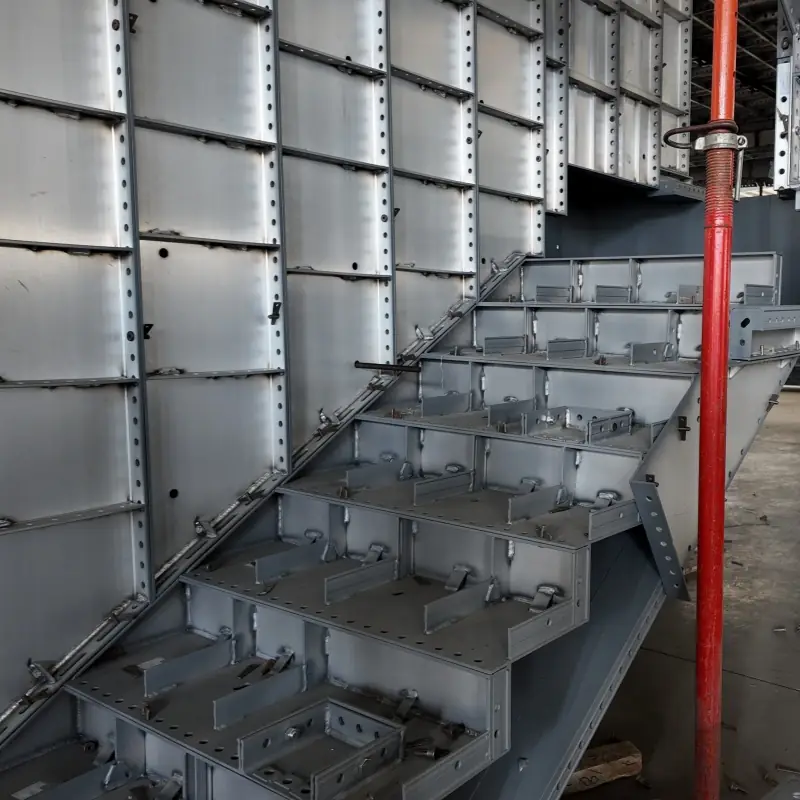
We provide scaffolding and formwork solutions for construction support and concrete formwork applications. Our ringlock system combines high-strength steel, precision welding, hot-dip galvanizing, and a rosette locking connection to support efficient modular assembly across demanding projects.
For contractors and distributors searching for scaffolding for sale, we recommend evaluating the complete system, including standards, ledgers, braces, platforms, and connection components. A system selected around actual project requirements can deliver better usability and long-term value than one chosen on initial purchase price alone.
Choosing Based on the Job, Not Just the System
Ringlock, cuplock, and frame scaffolding each have practical strengths. Ringlock emphasizes modular flexibility, cuplock focuses on efficient node connections, and frame scaffolding offers a familiar prefabricated configuration. The best solution depends on the structure being supported, site conditions, project duration, and operational priorities. We at Rongze can support buyers in evaluating suitable scaffolding and formwork configurations for their specific construction requirements.