Reliable scaffolding quality starts long before components reach a construction site. For contractors, rental companies, and project managers, every standard, ledger, brace, and rosette connection needs consistent dimensions and dependable mechanical performance. As a ringlock scaffolding manufacturer, we understand that quality control must cover the entire production chain, from high-strength steel selection and precision fabrication to surface treatment, final inspection, packaging, and shipment.

Steel Tube Selection Sets the Foundation
The production process begins with the material. Steel tubes used for ringlock scaffolding need suitable strength, dimensional consistency, and weldability for the intended application. Material identification and incoming inspection are therefore important controls before manufacturing begins.
We check incoming materials against purchasing and production requirements so that unsuitable or inconsistent steel does not enter the fabrication process. Controlling the raw material stage also helps establish traceability, allowing production teams to connect finished components with their relevant material and manufacturing records.
For a modular system, dimensional consistency is particularly important. Small differences in tube dimensions can affect connections, alignment, and the interchangeability that contractors expect from standardized components.
Precision Manufacturing Protects Component Consistency
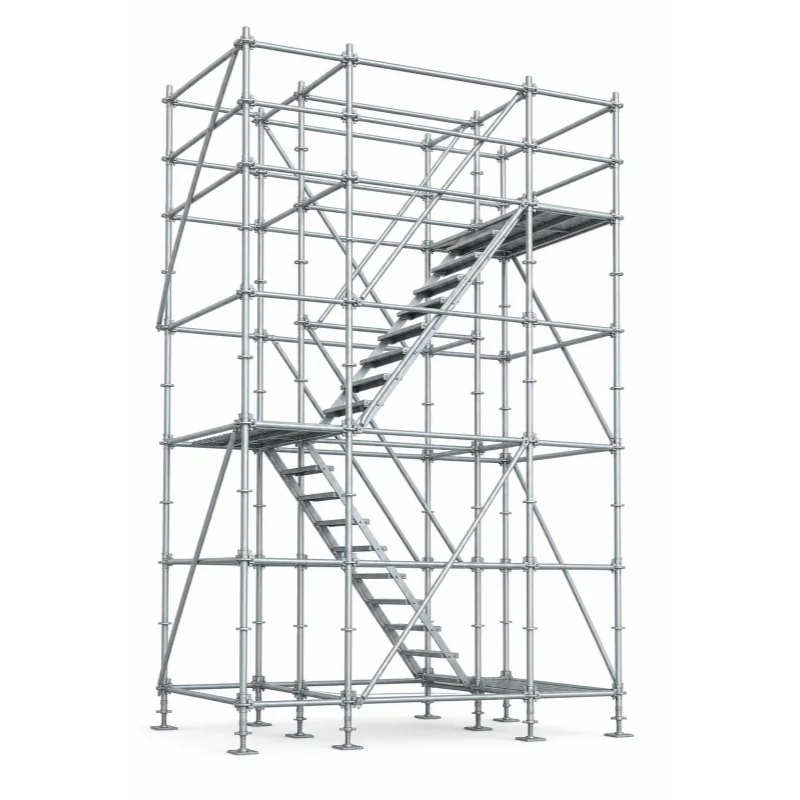
Ringlock scaffolding depends on multiple components working together as a modular structure. Standards provide vertical support, while ledgers and diagonal braces contribute to the overall configuration. The rosette locking connection allows these members to be assembled into different layouts according to project requirements.
Manufacturing accuracy therefore matters at every stage. Tube cutting, forming, welding, and component assembly need controlled processes to keep dimensions within specified requirements. Consistent production helps ensure that components can be assembled efficiently without unnecessary adjustment or replacement at the job site.
We use precision production processes to maintain consistency across batches. For contractors managing large quantities of scaffolding, repeatable manufacturing is valuable because individual components should fit the same system rather than requiring project-specific modification.
Welding Quality Deserves Close Attention
Welded joints are among the most important areas of quality control for fabricated scaffolding components. Standards, rosettes, ledgers, braces, and other assemblies must be joined correctly so that the finished components can perform as intended.
Quality control can include checking weld appearance, dimensions, joint positioning, and other requirements established for the product and manufacturing process. Operators also need appropriate procedures and equipment to produce repeatable results.
For a ringlock scaffolding manufacturer, welding inspection is not simply about identifying visibly defective joints. Process consistency is equally important. Stable production conditions can reduce variation between batches and support more predictable finished-product quality.
Surface Treatment Supports Long-Term Use
Construction scaffolding is frequently exposed to outdoor environments, moisture, dust, and changing site conditions. Surface protection can therefore influence serviceability and maintenance requirements. Rongze’s ringlock scaffolding system uses a hot-dip galvanized finish designed to provide corrosion resistance for demanding construction and industrial applications.
Galvanizing quality needs its own inspection process. Surface condition, coating coverage, and visible defects should be checked after treatment. Proper handling is also important because damage during subsequent processing, storage, or transportation can compromise surface protection.
For projects where scaffolding may be repeatedly erected, dismantled, transported, and stored, durable surface treatment can be particularly useful in maintaining the condition of reusable components.
Dimensional and Functional Inspection
Final inspection brings together the controls established throughout manufacturing. Rather than checking only whether a component looks acceptable, quality teams can verify critical dimensions, connection points, welds, surface condition, and other specified characteristics.
The modular nature of ringlock scaffolding makes connection accuracy especially important. The rosette locking connection is designed to connect standards with ringlock scaffolding ledgers, diagonal braces, and other components quickly and securely. Components must therefore be manufactured consistently enough for the connection system to function properly.
We apply strict inspections to help identify nonconforming components before they are packed. This approach reduces the possibility that defective products will move further into the supply chain and eventually create disruption at the project site.
Certification and Production Records Add Confidence
For business buyers, quality claims are more useful when supported by documented manufacturing controls. Recognized international certifications, inspection records, material documentation, and production records can provide additional evidence that quality requirements are being managed systematically.
Documentation also supports communication between manufacturers, distributors, contractors, and project teams. When buyers need information about materials, production batches, inspection results, or product requirements, organized records make technical communication more efficient.
We combine high-strength steel with controlled welding processes, precision manufacturing equipment, multi-stage inspections, and internationally recognized certifications to maintain consistent quality throughout the production of our modular scaffolding systems. This gives our customers a clearer basis for evaluating the consistency and reliability of our modular scaffolding products.
Packaging Is Part of Quality Control
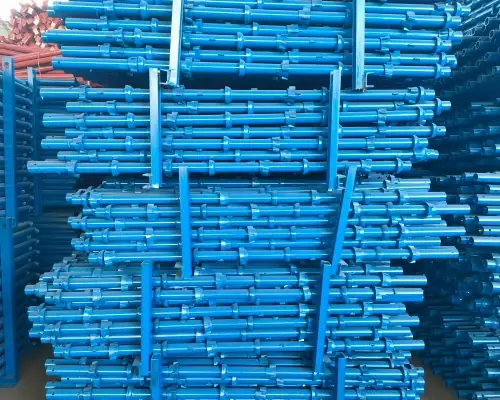
Quality control does not stop when a component passes inspection. Packaging and loading can influence the condition in which scaffolding arrives. Heavy steel components need to be grouped, protected, and secured appropriately to reduce unnecessary movement or damage during handling and transportation.
Clear identification also helps warehouse teams and customers manage different component types. Standards, ledgers, braces, and accessories should be organized so that quantities can be checked efficiently after arrival.
For international shipments, careful loading is especially relevant because products may pass through several handling points before reaching the construction site. Protecting finished components throughout this final stage helps preserve the quality achieved during manufacturing.
From Factory Control to Site Reliability
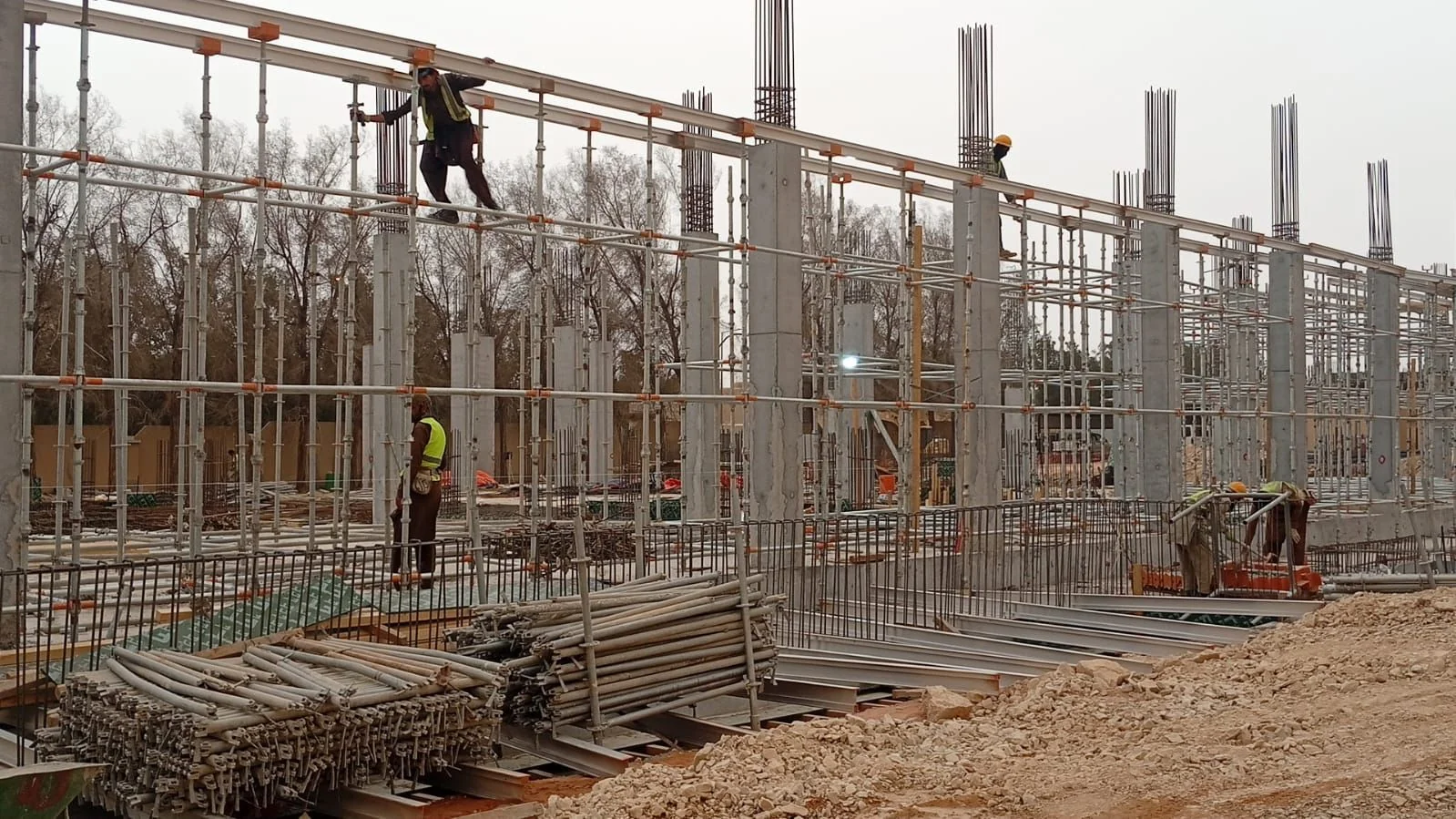
For contractors, ringlock scaffolding quality is ultimately measured by how consistently the system performs in real project conditions. That reliability begins with controlled materials and continues through precision fabrication, welding inspection, galvanizing, dimensional checks, documentation, packaging, and shipment.
As a ringlock scaffolding manufacturer, Rongze provides a durable modular system made from high-strength steel with a hot-dip galvanized finish. Our quality-control approach is designed to support stable connections, efficient modular assembly, corrosion resistance, and dependable performance across construction, industr