Concrete formwork determines the shape and position of fresh concrete before it gains sufficient strength to support itself. Errors in formwork preparation can therefore affect dimensional accuracy, surface finish, structural stability, and construction efficiency. For contractors and site teams, understanding common mistakes before concrete placement is an important part of controlling rework and project costs. Proper selection, assembly, inspection, and handling of steel ply formwork can help create more predictable results.
Choosing Steel Ply Concrete Forms Without Matching the Project
One common mistake is selecting formwork primarily according to purchase price or availability rather than project requirements. Wall thickness, structural geometry, concrete pressure, dimensions, repetition, and required surface finish can all influence the appropriate forming arrangement. Thicker walls and higher concrete pressure typically require stronger panels, reinforced frames, and more reliable connection systems to maintain stability during pouring.
Complex structural geometries may need adjustable or modular formwork layouts to achieve accurate shaping and easier installation. Larger dimensions and repeated structural elements can affect panel size selection and reuse planning, while projects requiring smoother concrete surfaces may prioritize formwork materials and panel finishes that minimize surface imperfections.
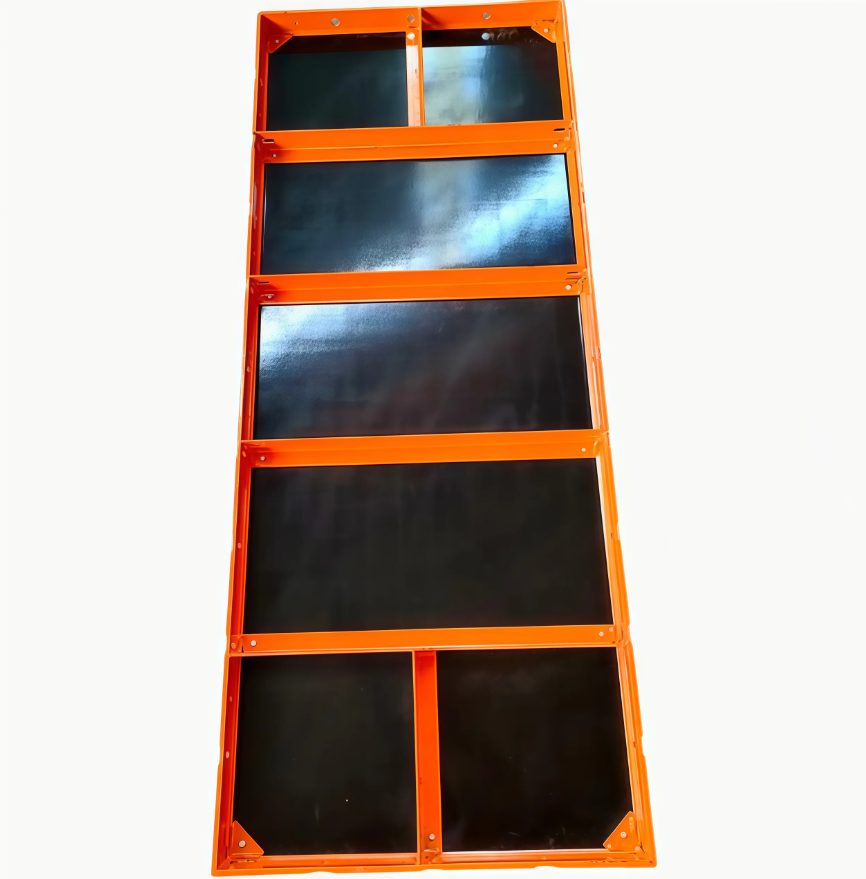
The steel ply concrete forms combine a steel frame with a plywood facing, creating a forming system that can be configured for different concrete applications. The system still needs to be matched to the project’s requirements. Using unsuitable panel dimensions or an inappropriate configuration can make installation more difficult and may require unnecessary modifications at the jobsite.
Ignoring Formwork Alignment and Dimensions
Fresh concrete follows the boundaries created by the form. If panels are incorrectly positioned, insufficiently aligned, or inadequately secured, the finished element may not match the intended geometry.
Before placement, crews should verify critical dimensions, panel positioning, connections, and supports against the project drawings. Particular attention is necessary at corners, openings, construction joints, and transitions between different structural elements. Small errors may become more difficult and expensive to correct after the concrete has hardened.
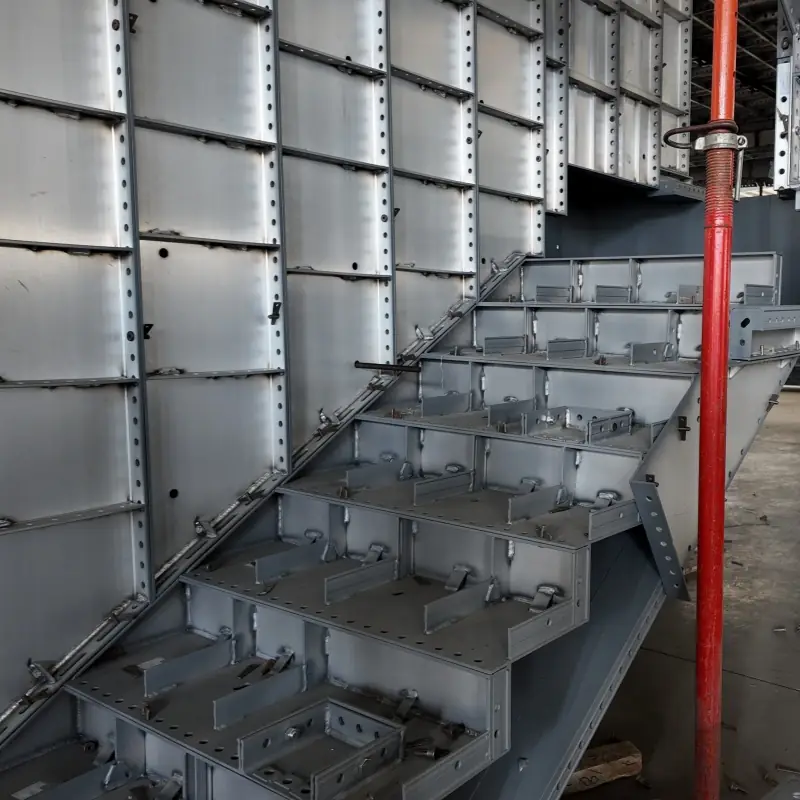
Our steel plywood formwork system uses modular sizes to accommodate different construction projects. We combine steel frames with plywood panels to create a reusable system for walls, columns, slabs, and beams, allowing contractors to establish consistent forming arrangements across suitable applications.
Underestimating Concrete Pressure
Fresh concrete exerts pressure against the formwork, and that pressure changes according to factors such as placement conditions and concrete behavior. Treating the form simply as a rigid container without considering these forces can create unnecessary risks.
Formwork and its supporting components need to be designed and assembled for the loads expected during construction. ACI guidance addresses formwork design, construction, inspection, and loads as important considerations in concrete forming operations.
Contractors should therefore avoid improvising support arrangements when the planned configuration requires a specific structural solution. The forming system, ties, braces, supports, and connections should work together rather than being considered as isolated components.
Failing to Check the Panels Before Assembly
Another frequent mistake is putting damaged or unsuitable components into service without inspection. Plywood facing can deteriorate through repeated use, while steel frames and connections can also experience damage during transportation, assembly, stripping, or storage.
A pre-use inspection provides an opportunity to identify visible problems before they affect the concrete pour. Panels should be clean and properly prepared, while damaged components should be dealt with according to the project’s procedures and the manufacturer’s requirements.
Because our steel ply formwork is designed for repeated use, proper handling and inspection are important to maintaining its practical value. Reusability can reduce the cost of equipment over multiple construction cycles, but only when components remain suitable for service.
Poor Cleaning and Release-Agent Application
The contact surface directly influences the appearance of the finished concrete. Residual concrete, dirt, damaged plywood, or inconsistent release-agent application can contribute to surface defects and make stripping more difficult.
Cleaning should take place before panels are reused. Release agents should also be applied according to the relevant product instructions rather than excessively or inconsistently. Good preparation helps the concrete separate from the formwork while supporting a more consistent surface appearance.
These basic procedures can be particularly important on projects where the same panels are used repeatedly. Consistency in preparation can help contractors maintain more predictable results from one concrete cycle to the next.
Rushing Assembly and Dismantling
Fast construction is valuable, but speed should not come from skipping critical assembly checks. Incorrectly connected panels or incomplete bracing can affect the stability and geometry of the formwork during concrete placement.
Our steel plywood formwork system is designed for easy installation and dismantling, helping crews work efficiently with a modular arrangement. Even with a straightforward system, installation should follow the project’s approved method and include appropriate checks before concrete is placed.
Dismantling also requires care. Removing forms too early or using improper methods can damage panels and potentially affect the concrete. The timing and procedure should follow the structural and project requirements rather than being determined solely by the desire to reuse panels quickly.
Treating Reuse as Automatic Cost Savings
Reusable formwork can offer significant practical advantages, but reuse does not automatically mean lower project costs. Equipment still needs suitable storage, transportation, inspection, cleaning, and maintenance between applications.
Our system is designed as a reusable and cost-effective solution by combining durable materials with a stable structural design that can withstand the pressure generated during concrete pouring.
The strong load-bearing capacity helps maintain formwork shape and alignment, reducing the need for frequent adjustments and improving construction consistency. Its modular format allows contractors to configure panels according to different structural requirements, making the system suitable for residential buildings, commercial developments, and infrastructure projects.
By planning panel layouts, installation sequences, and reuse cycles in advance, contractors can improve material utilization, reduce waste, and achieve more efficient project execution.
Build Better Results Through Formwork Discipline
Most formwork problems are easier to prevent than to correct after concrete placement. Selecting an appropriate system, checking dimensions, accounting for concrete pressure, inspecting components, preparing panel surfaces, and following proper assembly and stripping procedures can all contribute to better project outcomes.
At Rongze, we provide steel plywood formwork that combines durable steel frames with high-quality plywood panels for walls, columns, slabs, and beams. With easy installation and dismantling, reusable construction, flexible modular sizes, and strong structural stability, our system is designed to support contractors seeking efficient and consistent concrete forming across different projects.