Concrete quality is often discussed in terms of mix design, reinforcement, placement, and curing, but the formwork deserves equal attention when surface appearance and dimensional accuracy matter. Formwork determines the geometry of fresh concrete while resisting construction loads during placement. For contractors, the connection between panel quality and concrete quality becomes especially important when repeated casting, consistent dimensions, and smooth formed surfaces are project requirements.
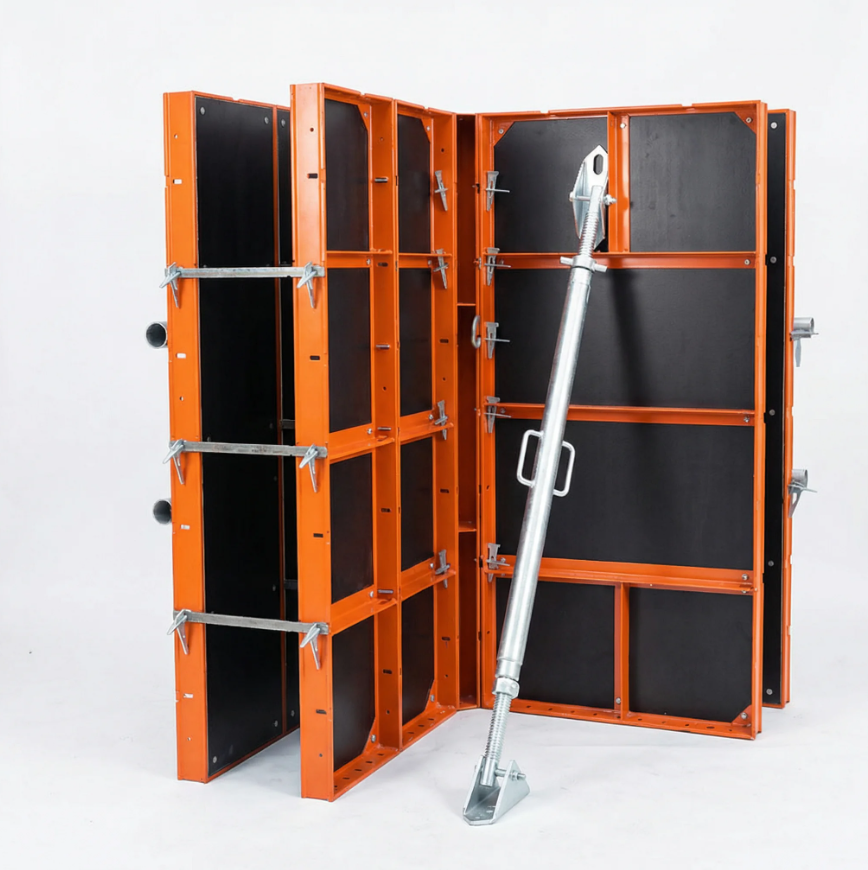
Why the Formwork Panel Matters
Fresh concrete exerts pressure against the formwork, while the system must maintain the required shape and alignment throughout placement. ACI guidance treats formwork design, construction, materials, inspection, and formed-surface requirements as connected parts of concrete construction. Poorly planned forms can contribute to dimensional deviations, surface imperfections, and corrective work.
The panel facing is the surface directly contacting concrete, so its condition can influence the resulting appearance. Joints, offsets, damaged areas, and inconsistent surfaces may become visible after stripping. ACI’s guidance on formed concrete surfaces specifically considers form facing, surface voids, texture, tolerances, and panelized formwork when defining surface quality.
Steel Ply Concrete Forms Combine Strength and Facing Quality
The steel ply concrete forms bring two functional elements together: a rigid steel frame and a plywood facing. The steel frame provides structural support and helps maintain panel geometry, while the plywood creates the surface against which concrete is cast.
This combination is useful for projects that need reusable panels without treating the facing and supporting structure as separate temporary solutions. The rigid frame can help maintain alignment during concrete placement, while the plywood provides a consistent contact surface when properly selected, installed, maintained, and replaced when necessary.
Alignment Directly Affects Concrete Geometry
Panel alignment is one of the clearest links between formwork and finished concrete. When adjacent panels are correctly positioned, their edges form a controlled boundary for the concrete. Misalignment can create offsets, irregular joints, or dimensional deviations that may require subsequent correction.
A practical steel ply forming system should therefore allow panels to be positioned and connected consistently. Contractors should check panel edges, joints, ties, supports, and alignment before each pour. ACI guidance also emphasizes planning and detailing for formed surfaces, including the layout of form-facing material and locations of joints and tie holes.
Surface Condition Influences the Finished Appearance
A smooth concrete finish cannot be guaranteed by the formwork alone, because concrete placement, consolidation, mixture properties, and other construction factors also influence the final surface. However, the form-facing material remains an important part of the process.
Plywood forms should be protected from conditions that can cause warping or curling. Industry guidance recommends keeping plywood bundles strapped and protected from the elements before use. Proper handling, cleaning, and suitable form-release practices can help preserve the facing and support more consistent results over repeated cycles.
Steel Frames Support Repeatable Formwork Cycles
Repeated concrete casting places practical demands on formwork beyond the first pour. Panels need to retain their geometry and remain serviceable through handling, erection, stripping, cleaning, and storage. A rigid steel frame can provide a durable supporting structure for a reusable plywood facing.
For contractors managing multiple pours, repeatability can have a direct operational benefit. Consistent panel dimensions make layout and positioning more predictable, while reusable components can reduce the need to fabricate new forms for every casting operation. ACI identifies form reuse, material selection, and efficient planning as important considerations in economical formwork.
Inspection Protects Both Panel and Concrete Quality
Before a pour, inspection should cover more than whether the panels are standing in the correct location. Crews should examine the plywood facing for significant damage, check frame members and connections, and verify that joints and supports are properly arranged.
Attention should also be given to cleanliness. Concrete residue from previous pours can interfere with the contact surface and affect subsequent finishes. Damaged plywood should not simply be reused because the supporting steel frame remains sound. Separating the condition of the frame from the condition of the facing helps contractors make better decisions about maintenance and replacement.
Choosing a Steel Ply Forming System for Different Structures
Walls, columns, slabs, and beams impose different geometric and support requirements. A suitable system should therefore be adaptable to the project’s structural configuration rather than selected solely by panel appearance or initial purchase price.
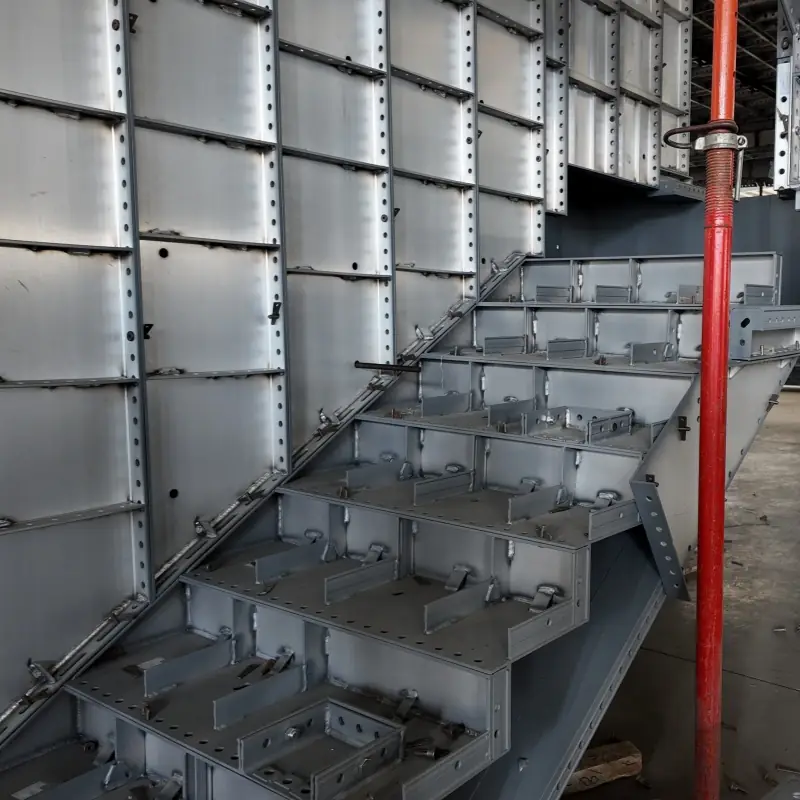
Our steel plywood formwork system combines high-strength steel frames with quality plywood panels for reinforced concrete construction. We design this modular approach to provide stable support and accurate panel alignment across repeated casting applications. The system can be used for walls, columns, slabs, and beams where reusable formwork is required.
Balancing Concrete Quality with Project Efficiency
Formwork selection affects more than the appearance of finished concrete. The system influences installation, alignment, stripping, reuse, maintenance, and the amount of corrective work required after casting. A well-planned solution should therefore balance structural requirements with practical site operations.
ACI’s formwork guidance gives safety, quality, and economy priority, while its formed-surface guidance emphasizes clearly defined expectations for the finished concrete. This reinforces an important business principle: formwork should be selected according to the project’s complete performance requirements rather than viewed simply as temporary material.
Making Every Panel Work Toward Better Concrete
The connection between panels and concrete quality begins with design and continues through installation, inspection, casting, stripping, and reuse. Rigid support helps preserve geometry, while a properly maintained facing contributes to consistent formed surfaces. Neither element works effectively in isolation.
We at Rongze provide steel ply concrete forms as part of our broader formwork solutions for reinforced concrete construction. By combining durable steel frames with quality plywood panels, we help contractors approach formwork construction with greater consistency, repeatability, and control over the conditions that shape the finished concrete.