Commercial construction demands scaffolding that can support workers and materials while fitting the pace and layout of the project. For procurement teams, the choice often comes down to two established approaches: frame scaffolding and ringlock. Both can provide reliable working platforms when properly designed and erected, but their structures and connection methods create different advantages for different project conditions.
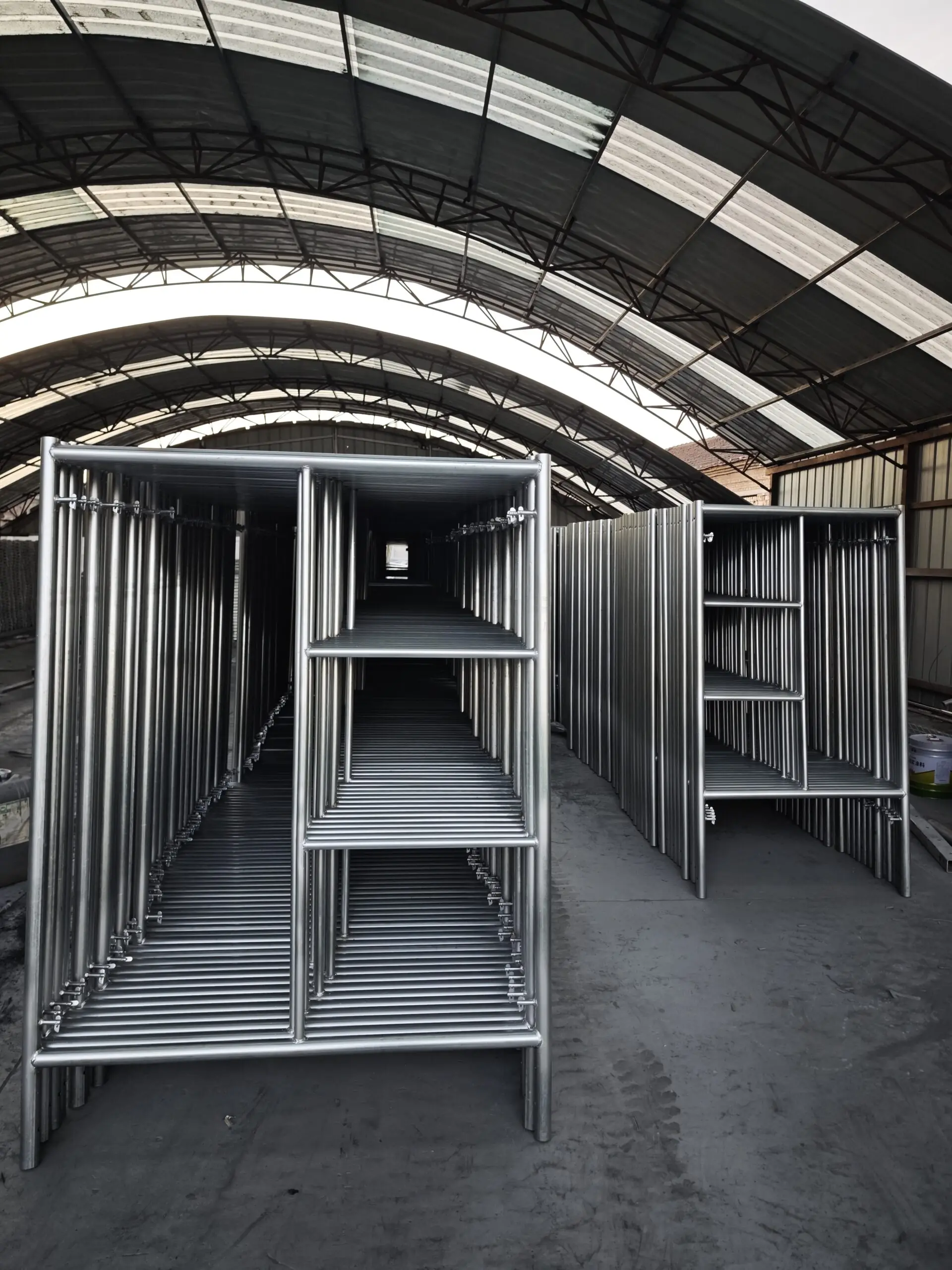
How Frame Scaffolding Works
Frame scaffolding uses prefabricated frames as its primary vertical structural elements. Cross braces and other components connect the frames to create working levels. The straightforward configuration makes this system familiar to many construction crews and suitable for projects where repeated scaffold bays are needed.
OSHA identifies fabricated frame scaffolds as a category of supported scaffold and requires frames and panels to be connected with cross, horizontal, or diagonal braces that secure the vertical members laterally. Stacked frames also need to remain plumb, level, and square, with brace connections secured against dislodging.
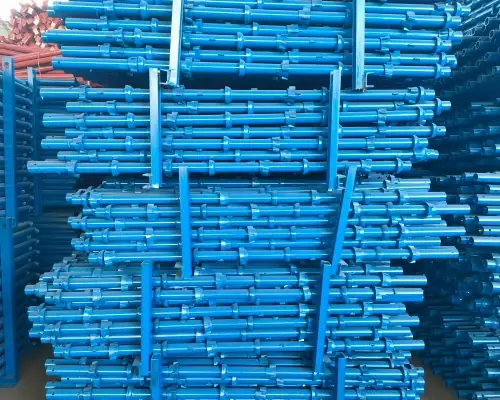
At Rongze, our frame scaffolding follows this practical modular concept. We use high-strength steel construction to provide stability and load capacity, while simple locking components support quick assembly and dismantling. Durable welded joints are also designed for long-term use, making the system a practical option for contractors handling recurring commercial work.
Where Ringlock Has an Advantage
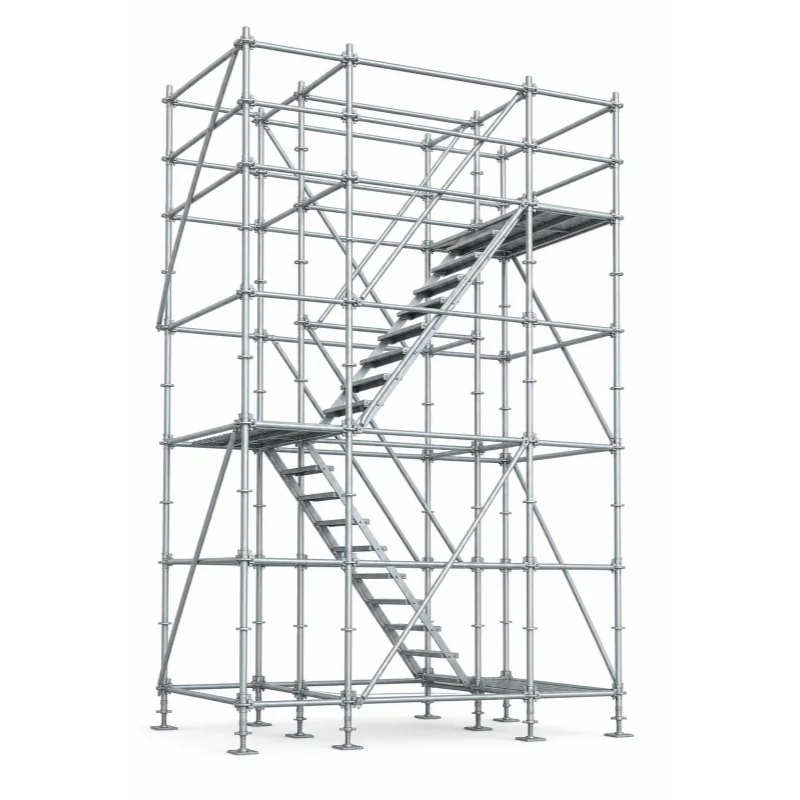
Ringlock takes a different approach. Instead of prefabricated end frames as the central connection structure, it uses vertical standards with rosettes and horizontal or diagonal members fitted with wedge heads. Doka describes ringlock as a modular system built around rosette and wedge-head connections, with applications including façade scaffolds, stair towers, shoring, and other configurations.
The rosette connection gives ringlock considerable flexibility when the scaffold needs to accommodate different layouts. Doka’s system, for example, uses rosettes with eight connection openings, allowing components to be connected at different angles. This can be useful when commercial projects include irregular façades, changing elevations, stair access, or more complex temporary structures.
Comparing Assembly and Labor Requirements
Assembly efficiency is an important consideration when labor availability and project schedules are closely managed. Frame scaffolding uses relatively simple components, and its prefabricated frames make the basic arrangement easy to understand. Cross braces and locking components complete the structural configuration.
Ringlock also emphasizes rapid assembly, but its modular connection provides more freedom in arranging ledgers, transoms, and braces. The connection uses a wedge-head mechanism that locks into the rosette, reducing the need for separate couplers in the primary system.
Neither system should be selected simply because it appears faster. Actual productivity depends on crew experience, project geometry, material handling, access requirements, and the erection sequence. A familiar frame system may be highly efficient on a repetitive building façade, while ringlock can offer greater efficiency where frequent configuration changes are expected.
Load Capacity Is a Design Question
Load capacity should not be judged by system name alone. Scaffold capacity depends on the complete configuration, components, bracing, dimensions, foundations, intended loads, and applicable design requirements.
OSHA states that each scaffold and scaffold component must support its own weight plus at least four times the maximum intended load, while scaffolds must be designed by a qualified person and constructed and loaded according to that design.
For procurement teams, this means asking for relevant load information and design documentation instead of assuming that either frame or ringlock automatically has greater capacity. Platform loading, material storage, worker numbers, and additional equipment should all be considered before selecting the system.
Which System Suits Commercial Projects?
Frame scaffolding can be a strong choice for commercial projects with relatively regular elevations and repeated work areas. Its simple modular design can shorten installation and dismantling operations, while high-strength steel construction and welded joints support durability during repeated use.
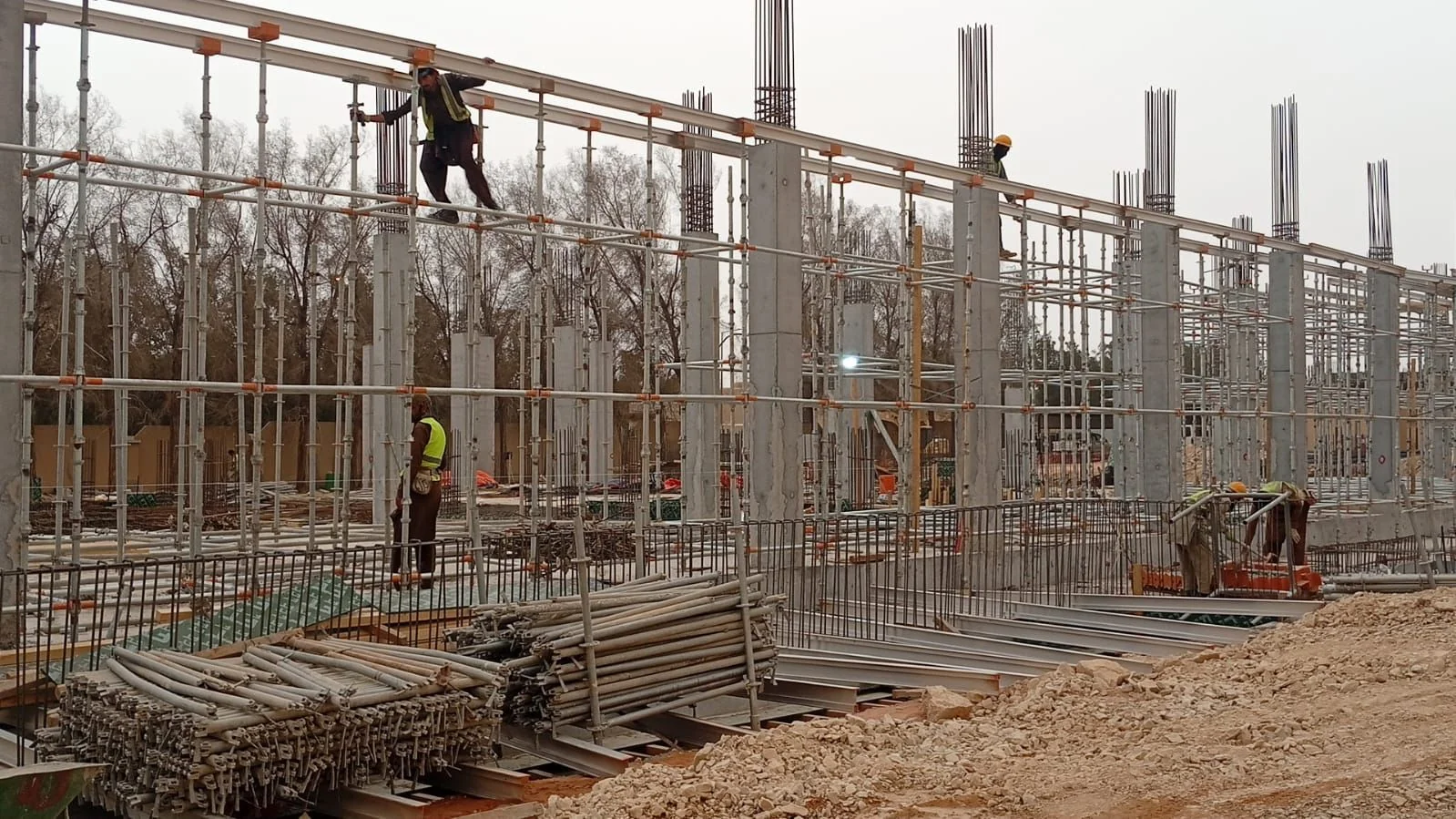
Ringlock becomes particularly attractive when flexibility is a priority. Its rosette-based connections can accommodate multiple directions and configurations, making the system suitable for projects where façade geometry, access requirements, or working levels vary. Doka also highlights its use across façade, stair, shoring, and other applications.
The surrounding supply chain also matters. Contractors should consider whether the required platforms, braces, access equipment, base components, guardrails, and replacement parts are readily available and compatible with the selected system.
Make the Selection Around the Project
Safety and compatibility should remain central to any commercial scaffolding decision. OSHA requires supported scaffold structural members to be plumb and braced against swaying and displacement, while scaffolds with a height-to-base-width ratio greater than 4:1 require appropriate restraint.
Components from different manufacturers should not simply be mixed because their dimensions appear similar. OSHA requires compatibility and structural integrity when components from different manufacturers are used together, and modifications intended to make components fit require appropriate evaluation.
We offer frame scaffolding alongside ringlock and cuplock systems, allowing customers to compare solutions according to commercial, industrial, and general construction requirements. Our role is to help customers select suitable scaffolding materials and supporting products based on the project’s actual working conditions rather than applying the same system to every site.
A Practical Choice for Commercial Construction
Frame scaffolding and ringlock both have a place in commercial construction. Frame systems emphasize straightforward modular assembly, while ringlock offers greater connection flexibility for more varied configurations. The right decision should consider building geometry, working levels, labor conditions, expected loads, project duration, and component availability.
For contractors evaluating frame scaffolding system options, we recommend treating the scaffold as an integrated construction system rather than a collection of individual parts. With the right configuration, component compatibility, and project-specific design, either approach can become an efficient foundation for safe and productive construction work.