Heavy concrete work places demanding requirements on formwork. During casting, fresh concrete creates lateral pressure against vertical form faces, while workers, reinforcement, equipment, and placement operations add further demands to the forming system. For contractors, choosing a formwork solution is therefore about more than initial cost. It requires a balance of structural stability, dimensional accuracy, surface quality, handling efficiency, and reuse. Steel ply concrete forms address these requirements by combining rigid steel frames with durable plywood panels.
Understanding the Demands of Heavy Concrete Work
Fresh concrete does not behave like a completely static material during placement. Its pressure against formwork is influenced by factors such as placement rate, concrete temperature, slump, vibration, mixture characteristics, and form dimensions. The American Concrete Institute recognizes lateral pressure as a fundamental consideration in vertical formwork design.
Heavy-duty projects can intensify these requirements. Large wall pours, structural columns, beams, slabs, and infrastructure elements may involve substantial concrete volumes and demanding casting schedules. Formwork therefore needs sufficient rigidity and properly designed supports to maintain its geometry while the concrete is being placed and consolidated.
Why Steel Frames Add Structural Rigidity
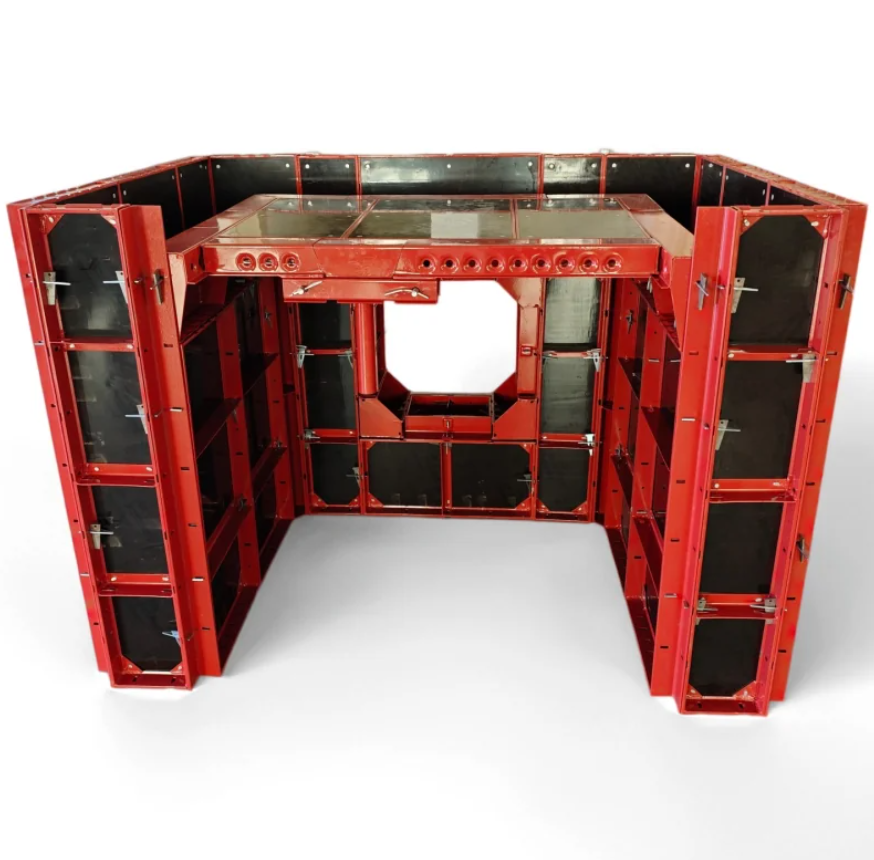
The steel frame is one of the key reasons steel ply forms are suitable for demanding applications. Steel provides a rigid supporting structure around the plywood face, helping the panel maintain its intended shape during concrete placement when the system is correctly designed, assembled, supported, and tied.
A rigid frame also helps distribute forces across the formwork assembly. Rather than relying solely on the plywood facing, the steel frame creates a structural perimeter that supports the panel and contributes to dimensional stability. This characteristic is valuable where repeated casting requires panels to maintain consistent geometry from one pour to the next.
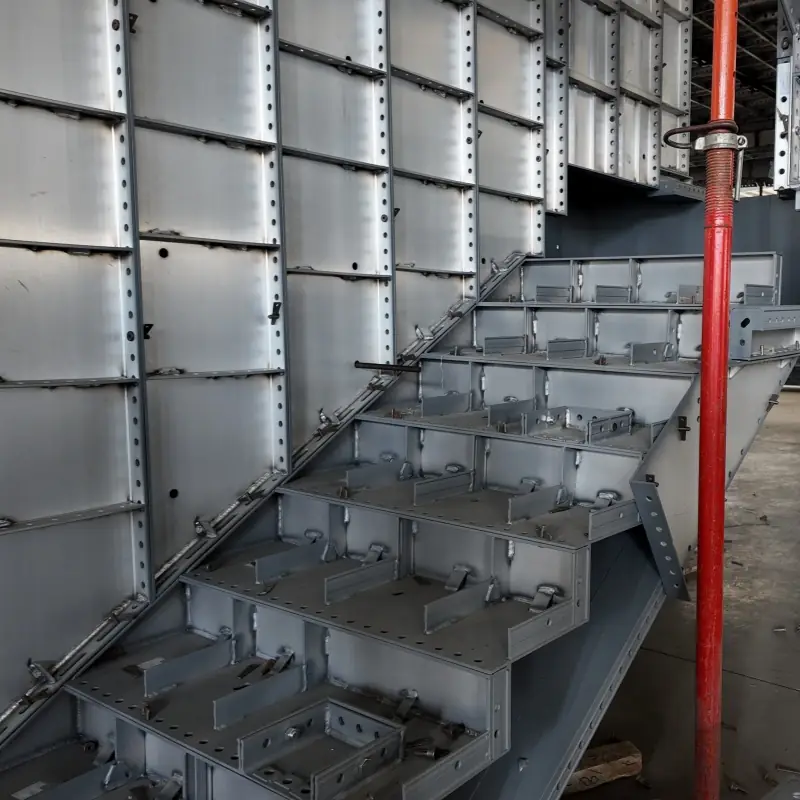
At Rongze, we combine high-strength steel frames with quality plywood panels to create a reusable formwork system for walls, columns, slabs, and beams. The combination is intended to provide stable support and accurate panel alignment during reinforced concrete construction.
Steel Ply Forms Combine Two Useful Materials
Steel and plywood contribute different properties to the forming system. The steel frame provides rigidity and structural support, while the plywood panel creates the concrete-facing surface. This combination makes the system more practical than treating the frame and facing as unrelated components.
The plywood surface can help produce a consistent concrete finish when it is properly maintained and used with suitable release practices. Meanwhile, the steel frame supports repeated assembly and dismantling. Together, these elements create a modular panel that can be reused across multiple casting operations.
For contractors managing projects with repeated wall or column pours, reusability can also influence labor planning and material consumption. A durable system may reduce the need to fabricate new formwork for every individual casting stage.
Panel Alignment Matters During Concrete Placement
Heavy concrete work requires more than simply resisting pressure. The formwork must also retain the required dimensions and alignment. Poorly aligned panels can affect wall thickness, corners, openings, and the resulting concrete geometry.
Steel ply forms can support accurate alignment because the rigid frame provides a defined panel structure. When panels are assembled according to the system design and adequately supported, the resulting form face can remain more consistent throughout casting.
This is particularly relevant for projects where concrete elements must connect accurately with reinforcement, embedded components, adjacent structural members, or subsequent construction work. Better dimensional control can reduce corrective work after stripping.
A Smooth Finish Starts With the Form Face
Concrete surface quality is strongly influenced by the condition and characteristics of the form face. For architectural or exposed concrete, imperfections in the forming surface can become visible after stripping. Even where appearance is not the primary concern, a consistent surface can simplify subsequent finishing operations.
Our steel plywood formwork uses quality plywood panels to provide the concrete-facing surface. With appropriate preparation, cleaning, release-agent practices, and handling, the panels can support consistent concrete finishes across repeated applications.
The actual result still depends on concrete mix design, placement, consolidation, workmanship, and other project conditions. Formwork should therefore be viewed as one part of the overall concrete quality process rather than the sole determinant of surface appearance.
Reusability Supports Project Efficiency
Heavy concrete projects often involve repeated structural elements. A formwork system that can be assembled, stripped, repositioned, and reused can help contractors organize these repetitive operations more efficiently.
Modular construction is particularly useful when projects include multiple walls, columns, beams, or slabs with similar dimensions. Standardized panels can simplify planning and reduce the amount of custom fabrication required between pours.
Our steel ply forms are designed as a reusable modular solution for residential, commercial, and infrastructure construction. The combination of steel frames and plywood panels supports repeated concrete casting while allowing contractors to configure the system according to the requirements of different structural elements.
Matching Formwork to Concrete Placement Conditions
Material selection alone does not determine whether formwork is suitable for a particular pour. Engineers and contractors need to consider the concrete mix, placement rate, temperature, consolidation method, dimensions, tie arrangement, bracing, and support conditions.
Research and industry guidance show that variables such as placement rate and concrete consistency can significantly affect lateral pressure. This means formwork should be selected and designed according to the actual casting conditions rather than simply classified by material.
For demanding work, project teams should follow the applicable engineering standards and the formwork supplier’s technical requirements. Correct assembly and support are essential to achieving the intended performance.
Choosing Steel Ply Forms for Demanding Projects
The value of steel ply forms comes from the combined performance of their components. A rigid steel frame provides structural support and dimensional stability, while the plywood panel supplies the concrete-facing surface. When these elements are manufactured accurately and used within their intended design conditions, the system can support repeated and efficient concrete operations.
At Rongze, we provide steel plywood formwork systems manufactured with high-strength steel and quality plywood for walls, columns, slabs, and beams. Our focus is to provide reusable formwork that supports stable concrete placement, accurate panel alignment, and consistent finishing across demanding construction projects.