Reusable formwork can support multiple concrete pours, but repeated use does not mean maintenance can be ignored. Concrete residue, moisture, impact, improper stripping, and poor storage can gradually affect both the forming surface and supporting frame. For contractors and formwork teams, a structured maintenance routine helps preserve panel accuracy, surface quality, and safe handling. Proper care can also extend the practical service life of steel ply concrete forms and reduce avoidable replacement costs.
Begin Maintenance Immediately After Stripping
Maintenance should start when the formwork is removed from the concrete structure. Fresh residue is generally easier to remove before it hardens completely, while aggressive cleaning after prolonged buildup can increase the risk of damaging the forming surface.
Workers should remove remaining concrete, grout, dirt, and other debris using methods appropriate for the plywood facing and steel frame. Tools that can gouge, puncture, or otherwise damage the plywood should be avoided. Cleaning should focus on restoring the forming surface without creating new defects.
Once cleaned, each panel should be checked before it is moved to storage or the next work area. This simple sequence—strip, clean, inspect, and store—creates a repeatable maintenance process between concrete pours.
Inspect the Plywood Facing for Damage
The plywood facing directly contacts the concrete, so its condition has a major influence on the quality of subsequent pours. Repeated casting can produce scratches, edge damage, surface wear, holes, or localized deterioration.
Small defects should not automatically be treated as reasons to discard the complete panel. Instead, maintenance teams can assess whether the damaged facing can be repaired or replaced according to the system’s requirements. This is particularly useful for reusable formwork because the supporting frame may remain serviceable even when the facing eventually needs attention.
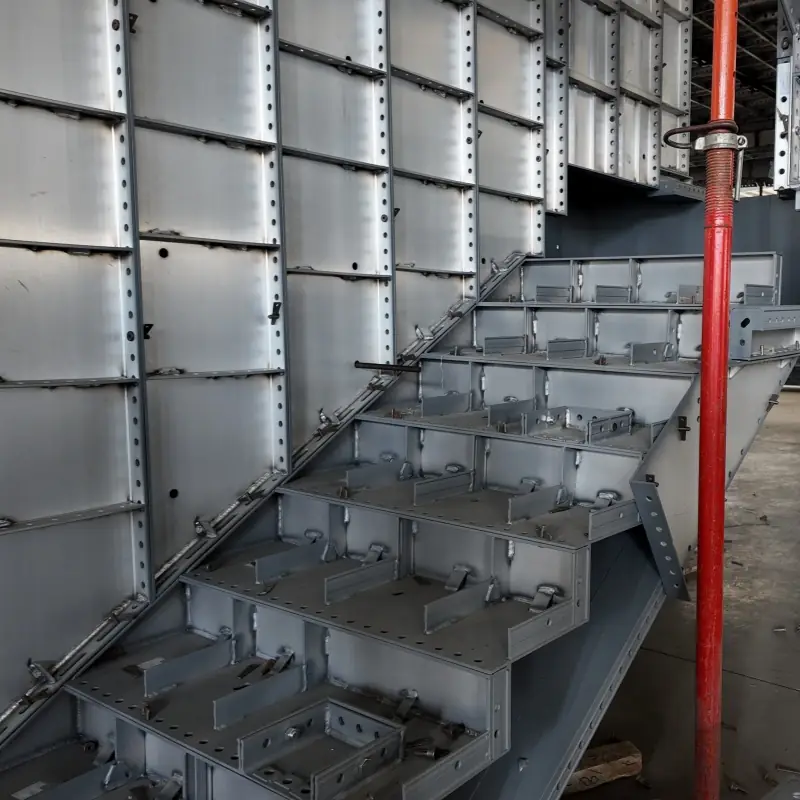
Our steel plywood formwork uses replaceable plywood facing, allowing maintenance teams to address worn forming surfaces without necessarily replacing the complete steel-framed panel. This design can make repeated use more economical across projects with substantial casting requirements.
Check Steel Frames and Connections
The steel frame provides rigidity and supports the plywood panel, making its condition equally important. After several uses, teams should look for visible deformation, damaged corners, cracked welds, corrosion, or other abnormalities that could affect the component’s intended function.
Connection areas deserve particular attention because repeated assembly, stripping, lifting, and repositioning can expose them to impact and mechanical wear. Hardware should also be checked for damage, deformation, or loss before the panel returns to service.
A panel that looks generally intact should not automatically be considered ready for another pour. Maintenance personnel should follow the supplier’s inspection criteria and applicable project procedures before approving components for reuse.
Remove Concrete Without Damaging the Form
Concrete removal is one of the most important maintenance steps. Hardened material attached to a panel can interfere with alignment and create unwanted marks on future concrete surfaces. However, overly aggressive chipping can damage the plywood or deform steel edges.
A controlled cleaning method is therefore preferable. Teams should select tools and procedures based on the forming materials, the degree of residue, and the manufacturer’s maintenance recommendations. Excessive force should not be used simply to achieve a completely bare surface.
Release-agent practices also matter. Applying an appropriate release agent according to the product instructions can help reduce concrete adhesion and make later stripping and cleaning easier. It should be applied consistently rather than used as a substitute for proper cleaning.
Protect Edges and Panel Alignment
Repeated handling can cause damage even when the formwork is not being used for concrete placement. Dropping panels, dragging them across rough surfaces, or stacking them incorrectly can damage edges and affect alignment.
Steel ply concrete forms should therefore be handled with suitable lifting and storage practices. Panels should be positioned so that they remain stable and are protected from unnecessary impact. Edge protection is especially important because damaged edges can make adjacent panels harder to align and may create visible irregularities in the finished concrete.
Before a subsequent pour, teams should confirm that panels remain straight, clean, and compatible with the planned configuration.
Store Steel Plywood Formwork Correctly
Storage conditions can strongly influence maintenance requirements. Plywood is sensitive to prolonged exposure to unsuitable moisture conditions, while steel components can be affected by water and corrosive environments.
Formwork should be stored in an organized location that protects components from unnecessary weather exposure, standing water, contamination, and accidental impact. Panels should be stacked securely and in a way that avoids excessive stress or distortion.
Good inventory control also helps. Separating damaged components from serviceable ones prevents unsuitable panels from accidentally returning to the work area. Clear identification can make inspection and maintenance decisions faster when several sets are being used across different projects.
Establish a Maintenance Checklist
A written checklist can turn maintenance from an informal task into a consistent quality-control process. After each use, teams can record whether the panel was cleaned, whether the plywood was inspected, whether the steel frame showed damage, and whether repairs or replacement were required.
The frequency of more detailed inspections can be based on usage, project conditions, and the manufacturer’s recommendations. High-use panels may require closer monitoring than components used occasionally.
We recommend treating maintenance as part of the formwork lifecycle rather than an emergency response to visible failure. Consistent records can also help contractors identify recurring damage patterns and adjust handling or stripping practices accordingly.
Extend the Value of Reusable Formwork
Repeated concrete use is where reusable formwork can create significant practical value, but that value depends on disciplined care. Cleaning protects the forming surface, inspections identify damage early, correct handling reduces deformation, and suitable storage helps preserve components between projects.
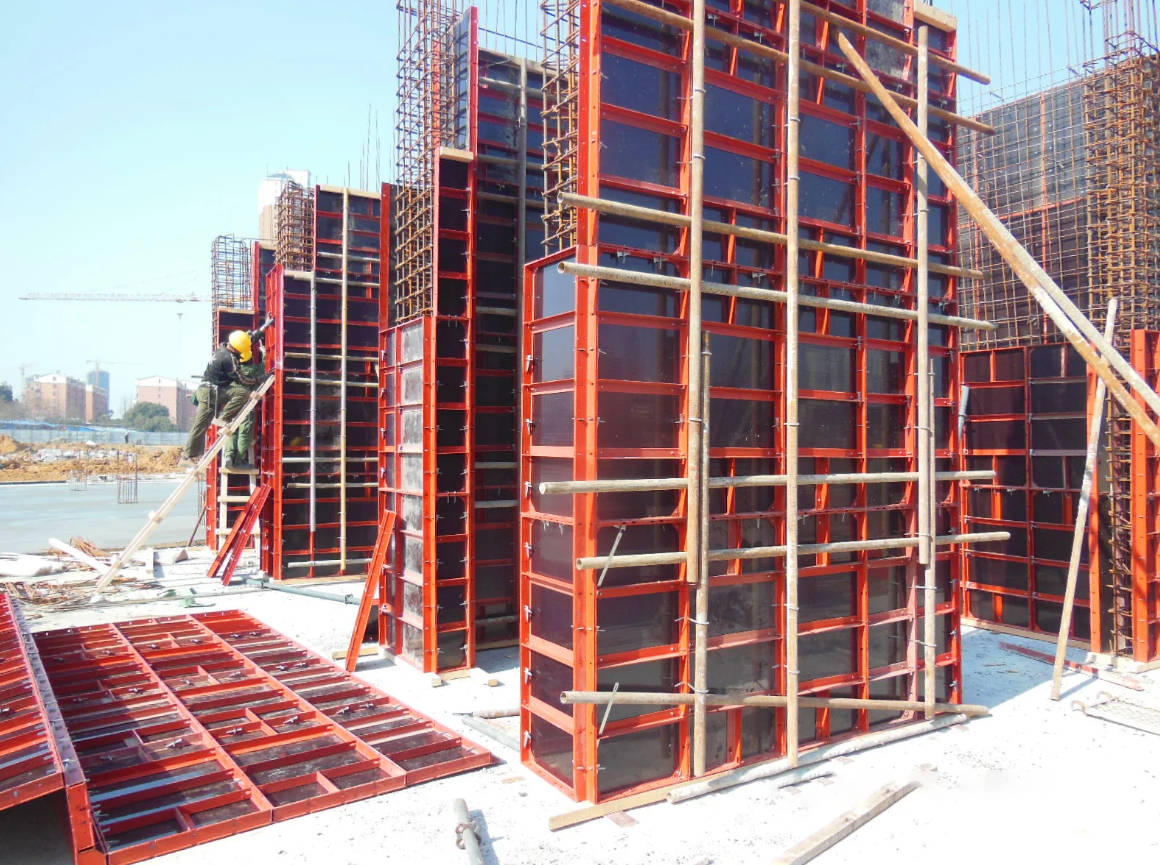
At Rongze, our steel plywood formwork combines durable steel frames with high-quality plywood panels for walls, columns, slabs, and beams. The rigid frame supports stable formwork and accurate panel alignment, while the replaceable plywood facing simplifies maintenance. With proper cleaning, inspection, handling, and storage, our reusable steel ply concrete forms can remain a practical solution for repeated concrete casting applications.