High-rise buildings and infrastructure projects demand formwork that can maintain geometry, withstand construction loads, and support repeated concrete operations. Formwork is also closely connected with jobsite safety, concrete quality, labor planning, and construction speed. For contractors and engineers, choosing suitable steel formwork systems means considering more than material strength. Design, assembly, support, inspection, reuse, and project-specific requirements all influence performance.
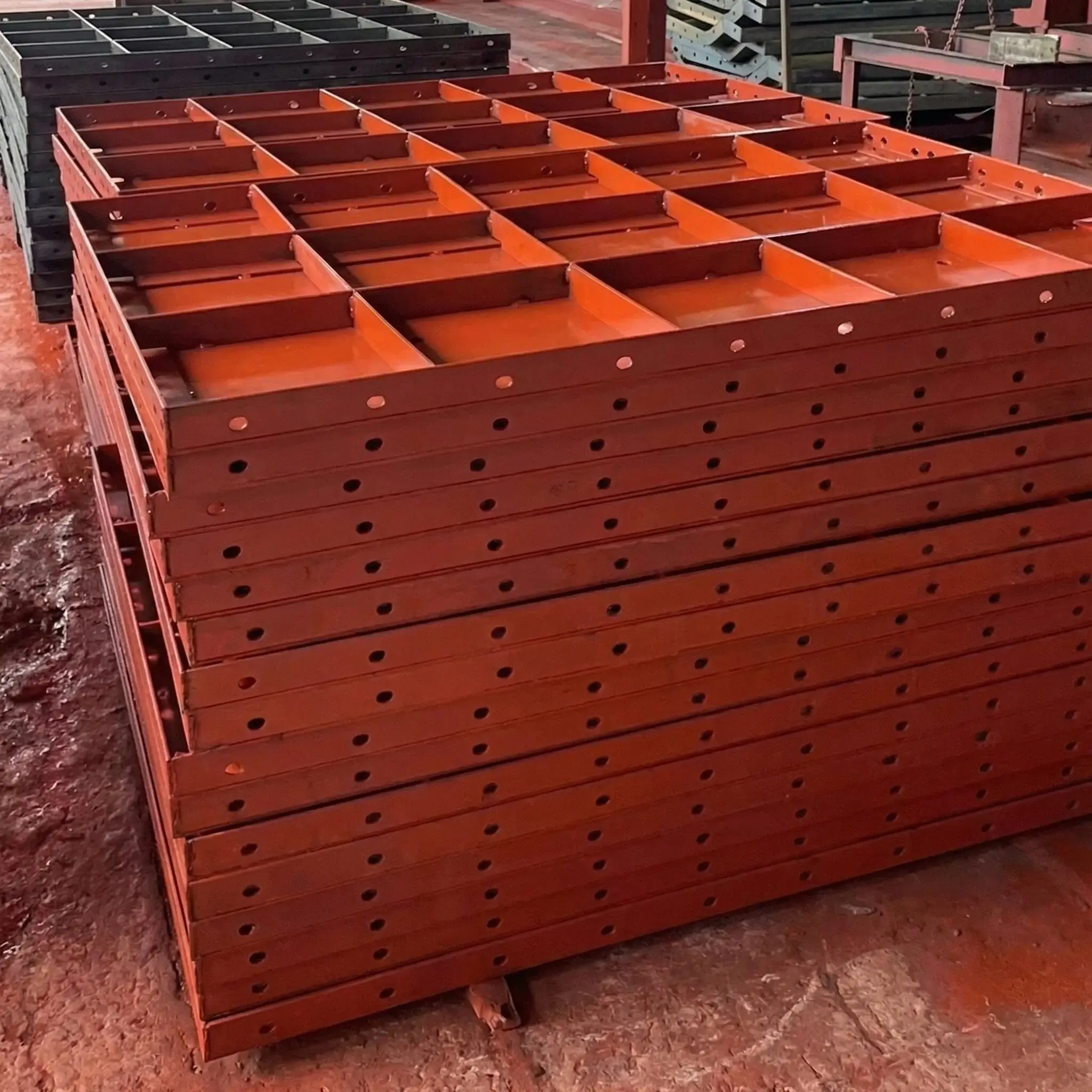
Why Steel Formwork Suits Demanding Concrete Work
Fresh concrete places vertical and lateral loads on formwork, while workers, equipment, reinforcement, and construction activities introduce additional loads. ACI guidance identifies vertical and horizontal loads, material properties, safety factors, construction practices, and stability as important formwork considerations.
Steel is well suited to applications where rigidity and dimensional consistency are important. A properly designed steel frame can provide stable support for the forming surface and help maintain panel geometry during concrete placement. This can be particularly valuable when contractors are repeating similar structural elements across multiple floors or sections.
Supporting High-Rise Construction Sequences
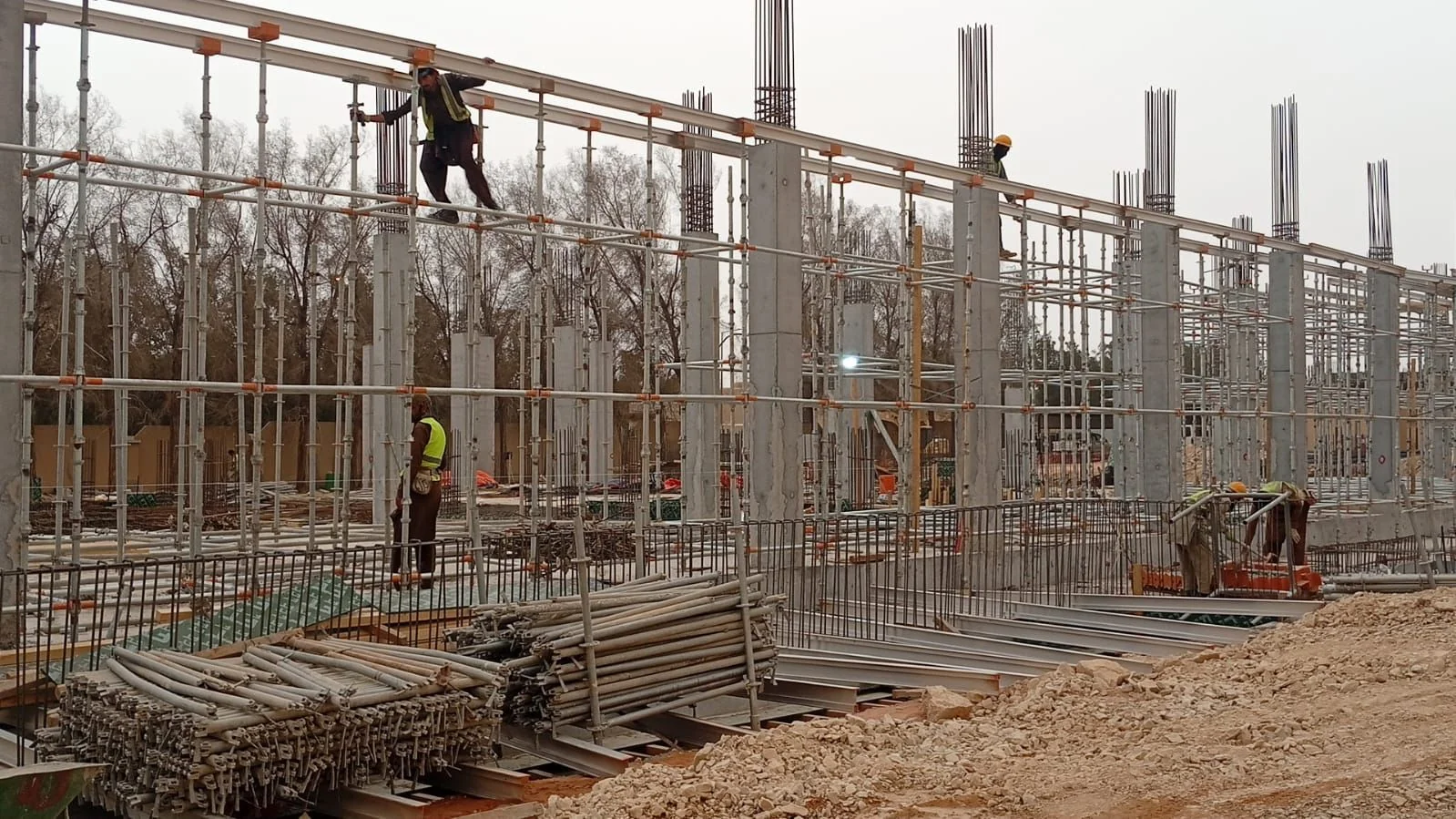
High-rise construction often involves repeated cycles of reinforcement, formwork installation, concrete placement, curing, stripping, and repositioning. Formwork that can be assembled and dismantled efficiently can support a more predictable workflow.
Modular steel formwork systems are particularly useful when projects contain recurring wall, column, beam, or slab configurations. Standardized panels and customizable components can be combined according to the structure and construction sequence, helping project teams plan formwork movements rather than repeatedly developing temporary solutions.
ACI also publishes specific guidance concerning shoring and reshoring for multistory buildings, emphasizing construction sequencing, construction loads, load distribution, and the timing of form removal.
Dimensional Accuracy Matters for Concrete Quality
Concrete formwork defines the shape and dimensions of the finished element. If panels move, deform, or become misaligned during placement, the resulting concrete may require additional correction or finishing work.
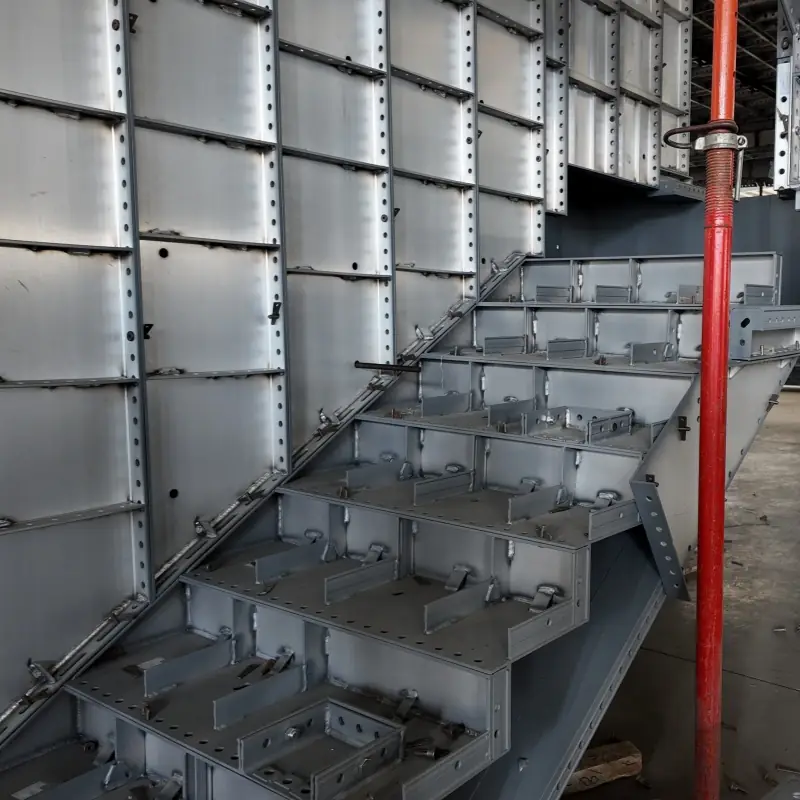
Steel formwork can support dimensional accuracy through rigid, manufactured panels and accurately positioned connections. Its high-strength steel structure provides excellent resistance to deformation under concrete pressure, helping maintain stable shapes during pouring and curing. Compared with materials that are more prone to warping or damage, steel formwork can be reused for multiple construction cycles while maintaining consistent performance. The smooth panel surface also helps create better concrete finishes, reducing the need for additional surface treatment.
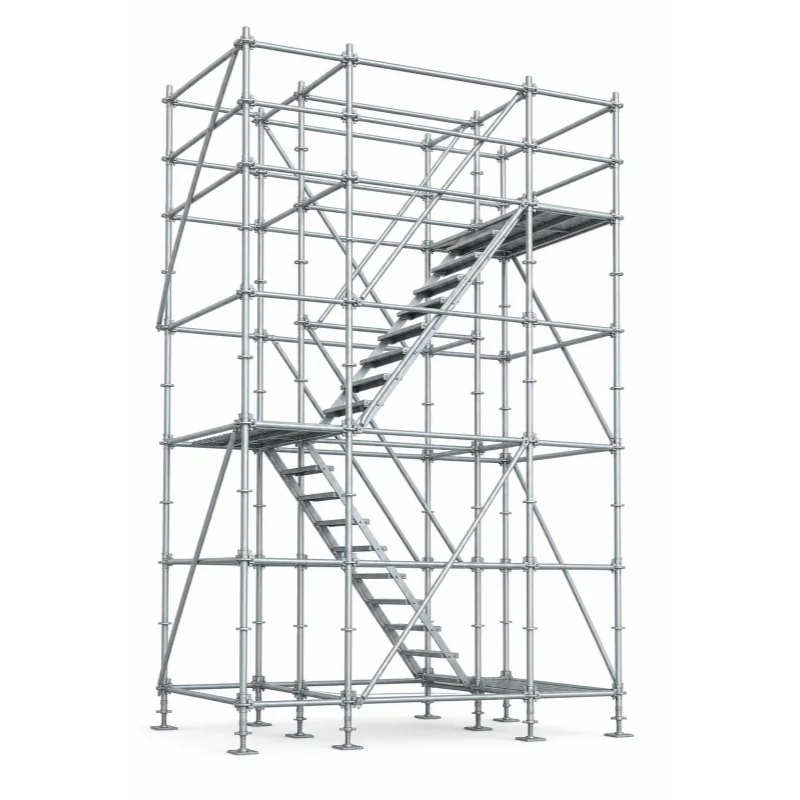
However, material choice alone cannot guarantee accuracy. Proper installation, bracing, ties, supports, and inspection remain essential. OSHA requires cast-in-place concrete formwork to be designed, fabricated, erected, supported, braced, and maintained so it can withstand reasonably anticipated vertical and lateral loads without failure.
Installation Efficiency Can Reduce Construction Time
Large projects often involve tight schedules, and labor productivity can influence overall construction performance. A formwork system that requires extensive site modification or complicated assembly can increase handling time.
Our steel formwork system uses modular components designed for quick assembly and dismantling. This approach allows crews to work with standardized elements while adapting configurations to walls, columns, beams, and slabs.
Simpler assembly does not mean that engineering controls can be skipped. The formwork still needs to be erected according to the approved design and project requirements. OSHA specifically requires formwork plans or drawings, including revisions, to be available at the jobsite.
Reuse Makes Steel Formwork Practical
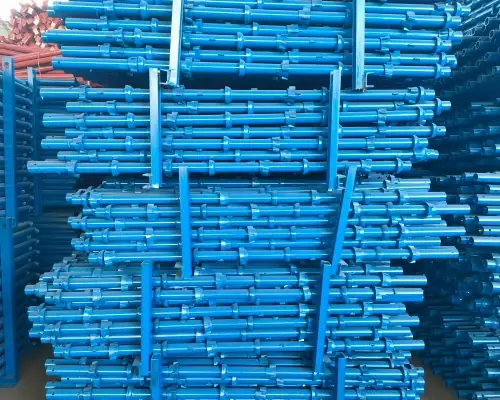
High-rise and infrastructure projects can involve hundreds of similar concrete elements. Reusable formwork can therefore offer practical advantages over systems intended for limited applications. Durable components can be cleaned, inspected, repositioned, and used for subsequent pours when they remain within their intended service conditions.
Reuse also encourages more systematic project planning. Contractors can establish sequences for stripping, cleaning, checking, transporting, and reinstalling panels. This can help reduce unnecessary fabrication and improve the utilization of formwork resources.
Our steel formwork systems are designed as reusable solutions for residential, commercial, and infrastructure construction. We manufacture them from premium-grade steel to provide strength, dimensional accuracy, and stability for repeated concrete forming operations.
Surface Finish Depends on the Complete System
The form face directly influences the appearance of formed concrete. For projects where surface quality matters, the condition of the forming surface, release-agent application, panel alignment, concrete placement, and vibration practices all need attention.
A rigid steel structure can help keep the forming surface stable during placement, while accurate panel connections can reduce unwanted offsets between adjacent sections. Nevertheless, contractors should evaluate the complete forming system and construction process rather than expecting steel alone to determine the final finish.
ACI’s formwork guidance gives safety, quality, and economy priority and includes considerations for formed concrete surfaces, materials, construction, inspection, and tolerances.
Inspection Should Continue Through the Pour
Inspection is essential before and during concrete placement. Damaged components, inadequate supports, loose connections, or unexpected movement can affect both safety and concrete quality.
OSHA requires shoring equipment to be inspected before erection and requires erected shoring to be inspected immediately before, during, and immediately after concrete placement. Equipment whose strength has been reduced by damage should not be used until appropriately addressed.
For project teams, this reinforces an important principle: efficient formwork is not simply formwork that installs quickly. It must also remain properly supported, maintained, and monitored throughout the casting process.
Selecting Steel Formwork for Large Projects
The right formwork solution should match the project’s structural design, concrete placement method, construction sequence, repetition requirements, and applicable safety standards. High-rise buildings and infrastructure projects benefit from systems that combine rigidity, dimensional control, efficient handling, and reusability.
At Rongze, we supply steel formwork systems for concrete walls, columns, beams, and slabs across residential, commercial, and infrastructure applications. Our premium-grade steel systems use modular panels and customizable components to support efficient assembly, dimensional accuracy, and reliable performance. By combining reusable construction equipment with project-focused configuration, we help contractors approach demanding concrete work with a more organized and efficient forming process.