Temporary support is a critical part of concrete construction, particularly while slabs, beams, ceilings, and formwork systems are being installed or supported. The right prop needs to match the required working height, expected load, site layout, and construction sequence. Choosing adjustable steel props based only on price or maximum height can create practical problems. A more reliable approach evaluates the complete support condition before selecting and installing the equipment.
Start With the Required Working Height
Height is one of the first factors contractors should establish. Construction projects can have different floor-to-floor dimensions, slab elevations, beam depths, and formwork arrangements. A prop that cannot reach the required height is unsuitable, while excessive adjustment capacity does not automatically make a prop the better choice.
Teams should determine the actual distance between the supporting surfaces and consider how the prop will be positioned within the formwork or shoring arrangement. Working height should also be evaluated together with the manufacturer’s load information because load-bearing capacity can vary according to extension and configuration.
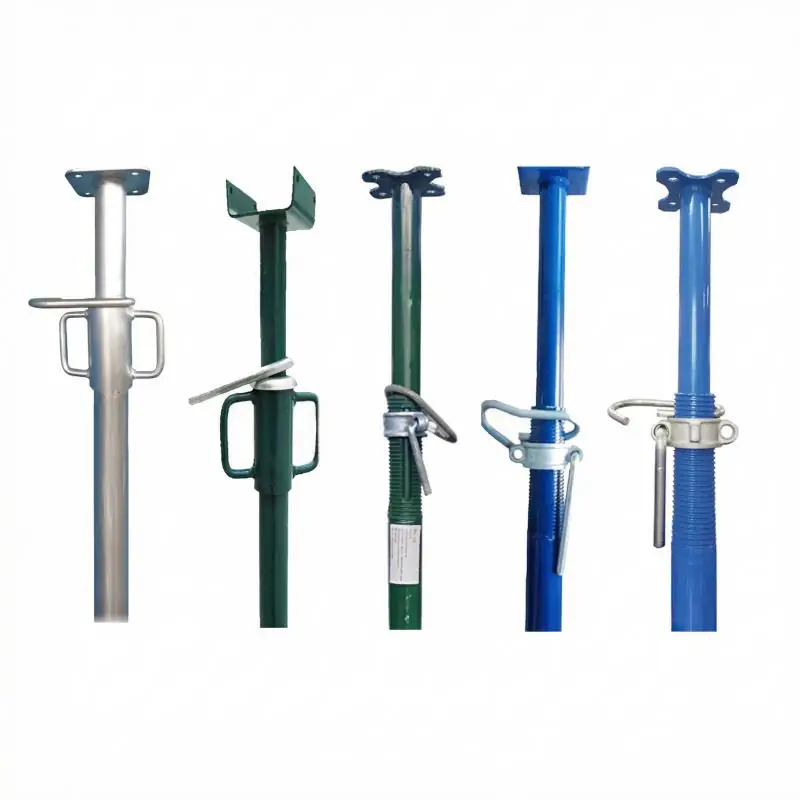
Our adjustable steel props use an inner and outer tube structure that allows the working height to be adjusted according to different site conditions. This gives contractors flexibility when supporting concrete slabs, beams, ceilings, and formwork systems.
Consider the Expected Load
Height is only one side of the selection process. The prop must also be appropriate for the loads imposed on the temporary support system. Concrete, reinforcement, workers, construction equipment, formwork, and other temporary loads can all contribute to the support requirements.
Load calculations should be based on the actual construction arrangement rather than a simple estimate. OSHA’s requirements for construction loads emphasize that formwork and shoring need to be capable of supporting reasonably anticipated vertical and lateral loads without failure.
For this reason, contractors should review manufacturer load tables and project engineering requirements before selecting props. The nominal size of a steel tube alone is not sufficient evidence of suitability.
Match the Prop to the Formwork System
Adjustable props rarely work as isolated components. They are commonly used as part of a broader temporary support arrangement involving beams, panels, frames, or other formwork components.
The prop position should therefore be coordinated with the formwork layout. Support spacing, load distribution, beam locations, slab geometry, and access requirements can all influence the arrangement.
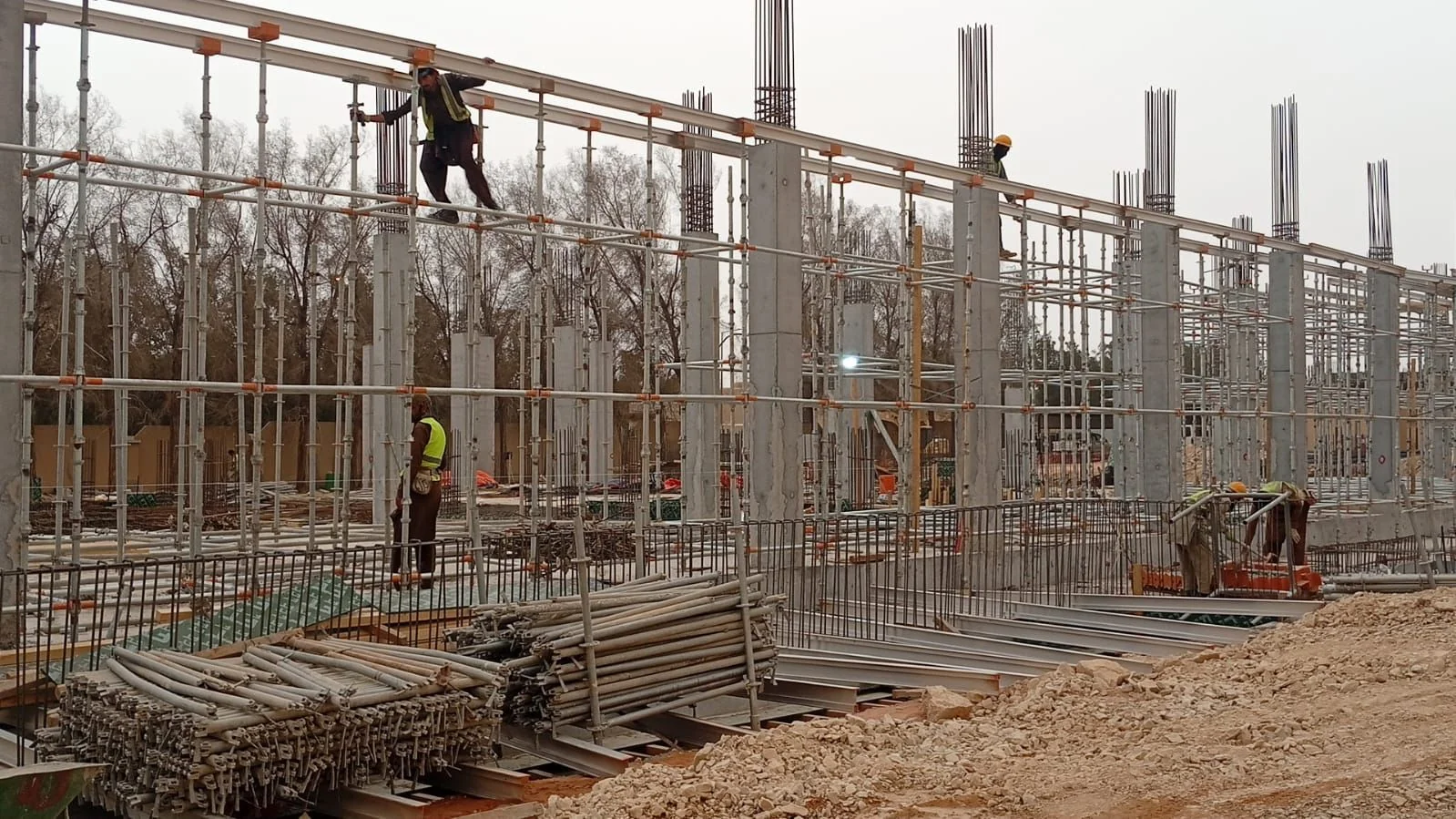
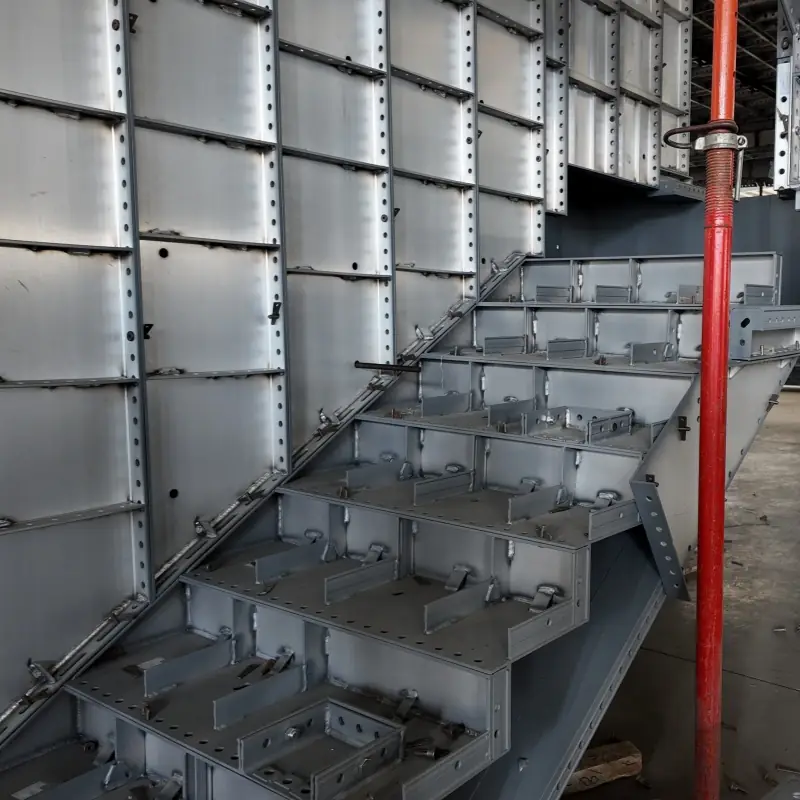
Our adjustable steel props are designed for use with concrete slabs, beams, formwork systems, and other structural elements during construction. Their adjustable height allows contractors to configure the supports for different formwork and shoring requirements instead of relying on a single fixed dimension.
Look at Adjustment and Locking Methods
Fast adjustment can make a noticeable difference on a busy construction site. Workers may need to set multiple props at different heights, make minor adjustments during installation, and dismantle the system after the concrete operation reaches the appropriate stage.
Our props use an adjustable inner and outer tube structure with a pin and threaded adjustment mechanism. The coarse adjustment provided by the pin can establish the approximate working height, while threaded adjustment allows more controlled positioning and secure setting.
A practical adjustment mechanism should also be easy for crews to understand and use consistently. Clear procedures matter because temporary support performance depends not only on the component itself but also on correct installation.
Check Material and Fabrication Quality
The material and manufacturing process can influence the durability and consistency of temporary support equipment. Steel tubes should have appropriate mechanical properties for their intended use, while welds and component dimensions need to remain consistent across production batches.
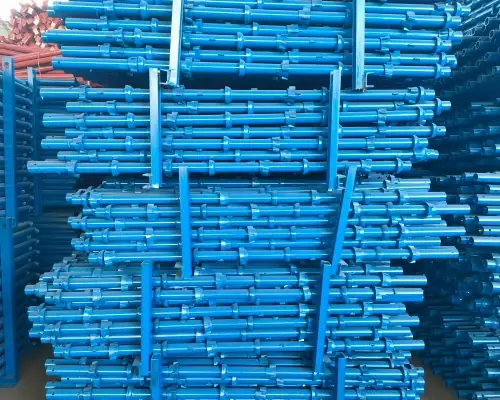
At Rongze, we manufacture our adjustable steel props from high-quality steel tubes using precision welding. The combination of suitable tube construction and controlled fabrication is intended to provide stable support during temporary construction applications.
For business buyers, manufacturing consistency can be particularly important when purchasing large quantities. Contractors may need many props on the same project, so variations between individual components can complicate installation and inspection.
Account for Site Conditions
Construction sites are rarely perfectly uniform. Uneven surfaces, restricted working areas, changing floor levels, and coordination with other trades can affect how temporary supports are positioned.
The supporting surface should be capable of carrying the intended reaction without excessive settlement or movement. Props should also be installed plumb and secured according to the applicable design and manufacturer’s instructions.
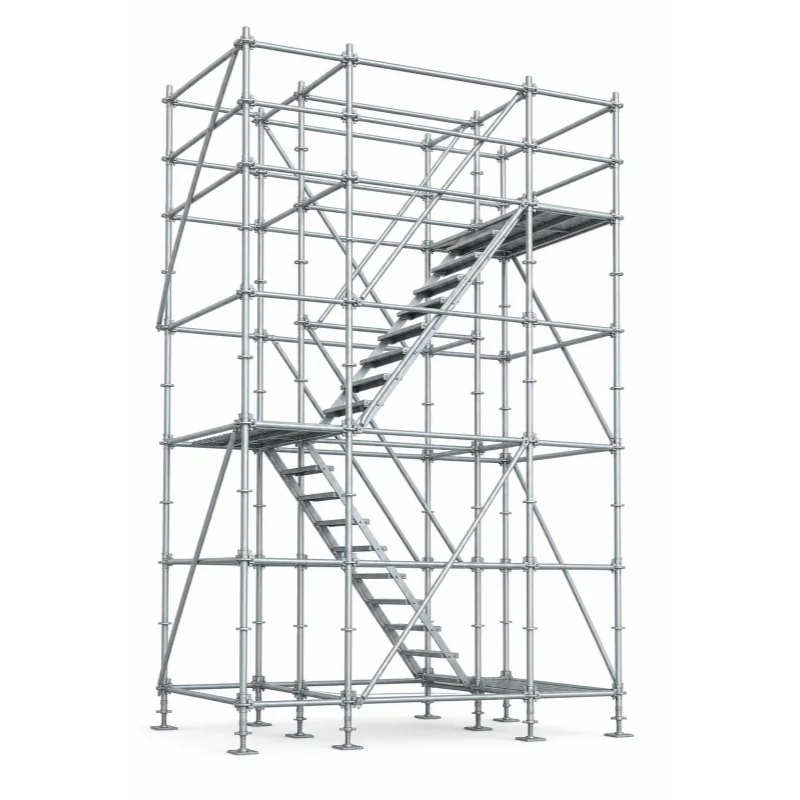
OSHA requires supported scaffolds, for example, to be erected on surfaces capable of supporting the imposed load and to use appropriate base plates or other suitable support arrangements where required. The same basic principle applies to temporary support planning: the complete load path matters.
Plan Installation and Removal
A prop may perform well technically but still create inefficiency if installation and dismantling are unnecessarily complicated. Contractors should consider how components will be transported to the work area, positioned, adjusted, checked, and eventually removed.
Lightweight handling requirements, accessible adjustment mechanisms, and standardized components can help crews establish repetitive installation procedures. However, speed should never override the approved temporary works sequence.
Removal is equally important. Formwork and temporary supports should only be dismantled when the concrete has reached the required condition and the project engineer or responsible person has confirmed that the structure can safely carry the relevant loads.
Choosing Props for the Actual Construction Condition
Selecting adjustable steel props is ultimately a matter of matching equipment to the complete temporary support requirement. Working height, load, formwork configuration, adjustment mechanism, material quality, site conditions, and installation sequence should all be evaluated together.
We at Rongze offer adjustable steel props for construction projects, including concrete slabs, beams, ceilings, formwork systems, and various other structural applications. Made from high-quality steel tubes with precision welding, our props feature adjustable inner and outer tubes plus pin and threaded adjustment for efficient height setting. This combination supports flexible installation and reliable temporary support across residential, commercial, industrial, and infrastructure projects.