Concrete construction demands a formwork system that can adapt to different structural layouts without sacrificing dimensional control. For contractors, project managers, and construction procurement teams, the challenge is finding the right balance between flexibility, repeatability, installation speed, and accuracy. Modern steel formwork systems address this challenge through modular panels and coordinated components that can be reused across multiple concrete applications.
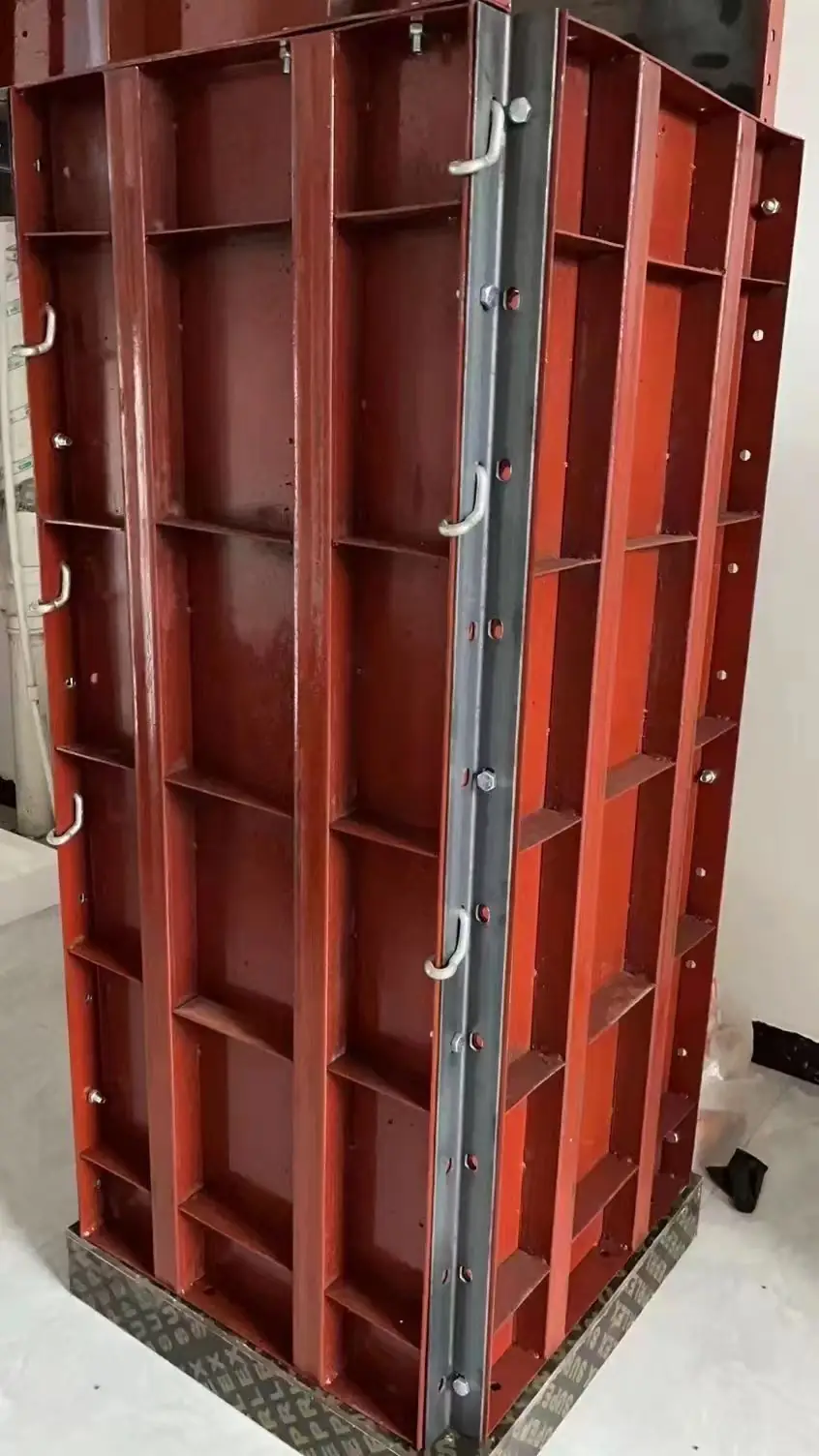
Why Modularity Matters in Concrete Formwork
Formwork temporarily contains fresh concrete and holds it in the required shape until the concrete gains sufficient strength. Modern panel systems have increasingly adopted modular designs because standardized components can simplify assembly, improve accuracy, and reduce waste compared with highly customized traditional formwork. The Concrete Centre identifies vertical panel systems as a common solution for walls and other vertical concrete elements.
For contractors, modularity means a formwork package does not have to be rebuilt from scratch for every pour. Panels can be combined, repositioned, and reused according to the dimensions of the structure. This makes the system particularly valuable on projects with repetitive walls, columns, beams, or slabs.
Flexibility Comes from Coordinated Components
A modular steel formwork system achieves flexibility through more than simply offering different panel sizes. Connections, fillers, ties, corners, supports, and other accessories must work together as a coordinated system.
Commercial modular systems demonstrate this principle through standardized panel grids. Doka’s Framax Xlife, for example, uses coordinated panel formats and a consistent increment grid so that panels can be arranged in different orientations while maintaining compatibility with system accessories.
This approach allows contractors to accommodate different wall lengths and heights without creating a completely new forming arrangement. For project planners, fewer incompatible components can also simplify transportation, inventory management, and site organization.
Structural Accuracy Starts with Panel Design
Flexibility has limited value if assembled panels cannot maintain the required geometry. Fresh concrete creates pressure against formwork, so the panel structure must remain stable under the conditions specified for the system.
The Concrete Centre notes that panel systems are designed for specific maximum concrete pressures and that concrete placement rates need to be controlled accordingly. This is an important consideration when evaluating steel formwork systems because structural accuracy depends on using panels within their intended design conditions.
A rigid steel frame can help maintain panel dimensions, while properly coordinated connections support alignment between adjacent panels. The result is a more controlled forming process, provided the system is correctly designed, assembled, and used.
Reusability Changes the Cost Calculation
The initial purchase price is only one part of the economic picture. A reusable formwork system can be deployed across multiple pours and projects, allowing its cost to be distributed over repeated applications.
This is one reason manufacturers emphasize durable frames and facing materials. Doka, for example, describes hot-dip galvanized steel frames and durable formwork sheets as features supporting high numbers of repeat uses.
At Rongze, we also design steel formwork systems around repeated use. Our reusable solutions are intended for concrete walls, columns, beams, and slabs in residential, commercial, and infrastructure projects. For buyers managing multiple construction stages, reusability can reduce the need to procure entirely new formwork for every application.
Installation Speed Depends on System Integration
A modular system can only deliver installation benefits when its components are designed to connect efficiently. Poorly coordinated panels or excessive connection steps can reduce the productivity advantage of modular construction.
The Concrete Centre notes that modular panel systems can reduce assembly time and labor requirements because they use fewer components and are engineered for straightforward adjustment. Doka similarly highlights self-aligning connectors and coordinated panel formats as ways to accelerate forming work.
Our modular components are designed to support quick assembly and dismantling. This can help contractors shorten forming cycles and reduce labor requirements, particularly where similar configurations are repeated throughout a project.
Balancing Standardization with Project-Specific Needs
Standardization should not mean that every project receives exactly the same configuration. Building geometry, concrete dimensions, access conditions, and construction sequences can vary considerably.
The most practical approach is to use standardized core components while allowing enough flexibility to accommodate project-specific requirements. Modular systems can provide that balance by combining repeatable panels with compatible accessories and adjustment options.
For buyers, this distinction is important. A system with many components is not automatically flexible. What matters is whether those components can be combined logically and efficiently to solve common forming challenges without excessive custom fabrication.
How We Approach Modular Steel Formwork
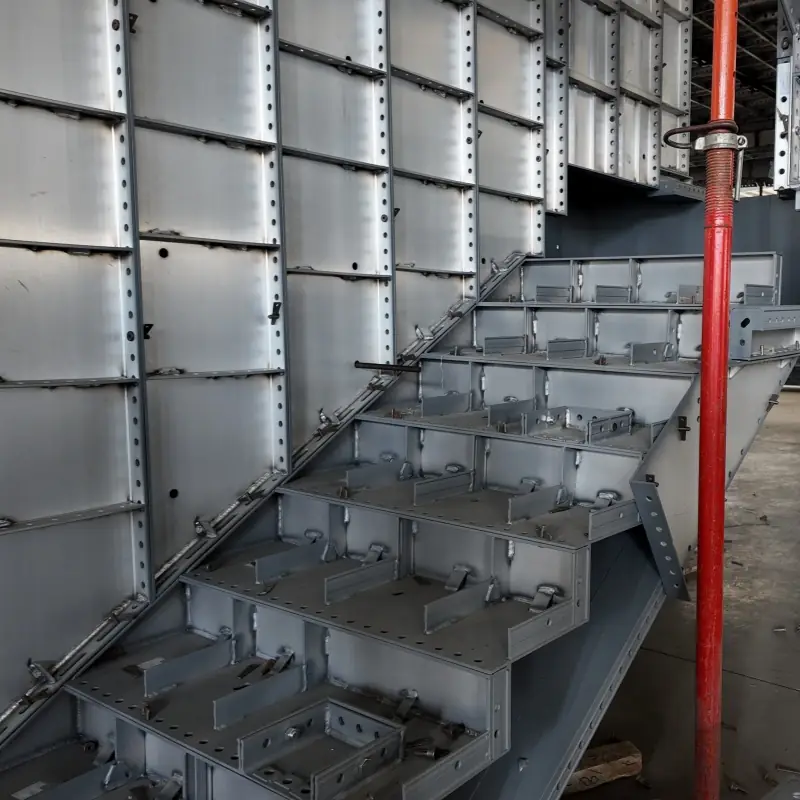
We supply reusable modular steel formwork for concrete walls, columns, beams, and slabs. Our solutions combine modular panels with customizable components to support efficient assembly, dimensional accuracy, and reliable performance across different concrete formwork applications.
Our approach also emphasizes three practical considerations: excellent reusability, precision engineering, and easy installation. Repeated use can help control long-term project costs, while dimensional accuracy can support consistent concrete surfaces and reduce unnecessary finishing work. Modular components are intended to make assembly and dismantling more efficient.
For contractors, distributors, and project buyers, we can also adapt formwork configurations according to application requirements rather than treating every project as identical.
Finding the Right Balance for the Project
The value of modular formwork lies in balancing two requirements that can sometimes appear contradictory: flexibility and precision. Standardized components make systems easier to assemble, reuse, transport, and adapt, while engineered steel frames and compatible connections help maintain structural geometry during concrete placement.
The steel formwork systems should be evaluated as complete solutions rather than as individual panels. When modular design, structural accuracy, reusability, and installation efficiency are considered together, contractors can build a formwork strategy that supports both immediate construction productivity and longer-term project value.