Choosing formwork is not simply a matter of selecting steel panels that fit a concrete wall or slab. Panel thickness, dimensions, connection details, and the overall arrangement determine how effectively a system maintains its shape during concrete placement. For contractors and project engineers, these details influence installation efficiency, dimensional control, concrete surface quality, and the ability to reuse equipment across projects. A well-planned system starts with understanding how these factors work together.
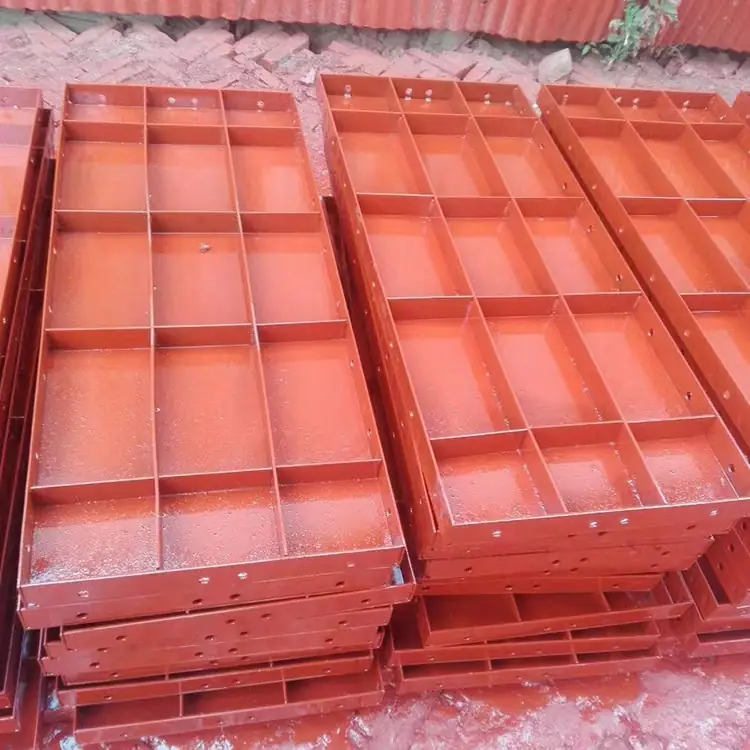
Why Panel Thickness Matters in Formwork Design
Thickness is one of the first specifications contractors examine when evaluating steel formwork panels. However, thickness should not be considered independently from panel geometry, framing, support spacing, connection design, and anticipated construction loads. A thicker panel is not automatically a better solution if the overall system is poorly configured.
Formwork must be designed, fabricated, erected, supported, braced, and maintained so it can withstand reasonably anticipated vertical and lateral loads without failure. Therefore, panel thickness should be selected as part of an engineered system rather than treated as the only indicator of strength.
For project procurement teams, this distinction is important when comparing steel formwork systems from different suppliers. Instead of comparing thickness alone, buyers should review the complete panel construction and the conditions under which the system is intended to operate.
Panel Size Influences Installation Efficiency
The dimensions of a panel affect how easily crews can transport, position, connect, and remove it. Smaller panels may provide greater flexibility around irregular geometries, while larger panels can cover more area with fewer individual connections. The right balance depends on the building design and construction sequence.
Standardized panel dimensions can be particularly useful on repetitive projects. When walls, columns, beams, or slabs follow recurring layouts, consistent components can simplify planning and reduce unnecessary adjustments between concrete pours.
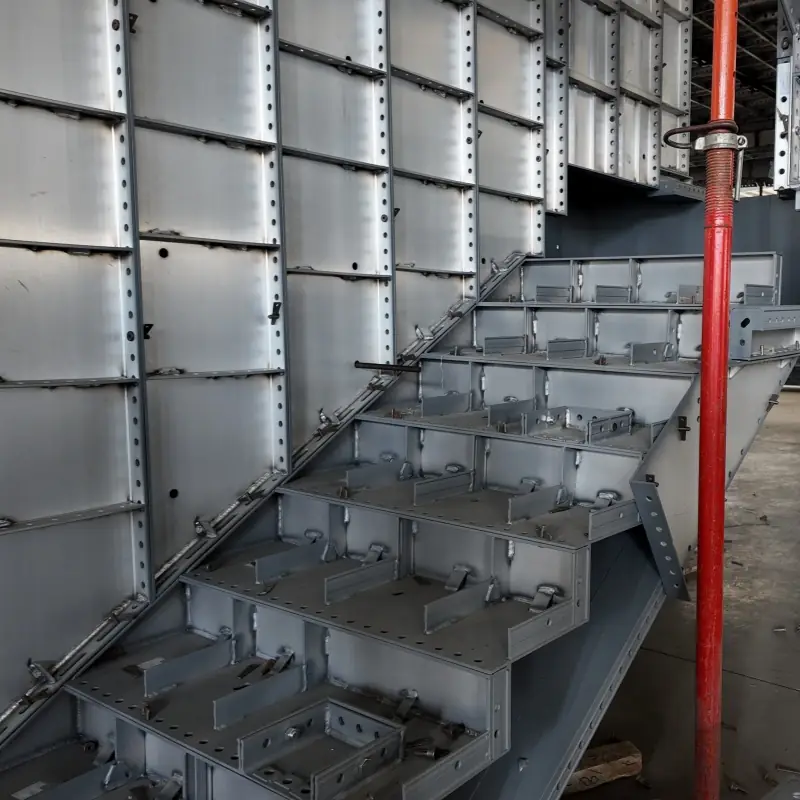
We provide steel formwork panels in customizable sizes to support different project requirements. Our modular approach allows customers to develop configurations around the dimensions and geometry of residential, commercial, and infrastructure projects rather than relying on one fixed panel arrangement.
Connection Details Hold the System Together
A formwork panel does not work alone. Connections transfer forces between adjacent panels and help maintain the intended geometry during concrete placement. Poorly selected or incorrectly installed connections can lead to movement, gaps, misalignment, or difficulty during stripping.
Connection details should therefore be evaluated alongside the panel itself. Contractors need to consider how panels are joined, how corners and transitions are handled, and how the completed assembly is supported and braced.
This is particularly important for larger assemblies. A connection that works adequately for a small panel arrangement may not provide the same performance when multiple panels are combined. The complete forming configuration should be reviewed rather than judging individual components in isolation.
Dimensional Accuracy Depends on the Complete Assembly
Accurate panel dimensions are useful only when the assembled system maintains those dimensions during concrete placement. Fresh concrete creates loads against the form, while construction activities can introduce additional forces. A stable system helps preserve the intended wall thickness, alignment, openings, and other structural dimensions.
OSHA requires formwork to be designed and maintained to support anticipated loads without failure. This reinforces why panel selection, bracing, supports, and connections need to be coordinated from the beginning.
Before a pour, site teams should check the assembled forms for alignment, dimensions, support conditions, and connection security. These checks can identify issues while they are still relatively easy to correct.
Surface Finish Starts at the Panel Face
The panel surface also affects the appearance of formed concrete. A suitable contact face can help produce a more consistent finish, while damaged surfaces, contamination, or poorly fitted joints may leave unwanted marks or irregularities.
For projects where exposed concrete appearance matters, contractors should pay attention to panel condition and preparation as well as structural performance. Cleaning, appropriate release-agent practices, and careful handling between cycles can help maintain consistency.
Our Rongze steel formwork systems are designed for reusable concrete construction involving walls, columns, beams, and slabs. By combining modular panels with customizable components, we support contractors seeking efficient assembly, dimensional accuracy, and reliable performance across repeated applications.
Customization Helps Match Different Projects
Construction projects rarely share exactly the same geometry. Even when two developments use similar structural concepts, their floor layouts, wall dimensions, openings, and construction sequences can differ. Custom panel sizes and system configurations can help reduce the need for improvised modifications.
We provide customized panel sizes, system designs, surface treatments, logos, and packaging. This approach gives contractors, distributors, and other buyers greater flexibility when developing procurement plans for specific projects.
Customization should still follow the requirements of the complete forming system. Changes to panel dimensions or connection arrangements should be evaluated for their effect on structural performance, handling, assembly, and reuse.
Inspect Connections Before Concrete Placement
Even a well-designed panel can perform poorly if it is incorrectly installed. Before concrete placement, crews should inspect connections, supports, braces, alignment, and other critical details according to the approved construction method.
The importance of proper support extends beyond the panels themselves. OSHA defines formwork as the complete support system for fresh or partially cured concrete, including the form or sheeting, shores, braces, hardware, and related supporting members. This makes it clear that panel selection is only one part of formwork planning.
Selecting Panels as Part of a Complete System
Thickness, size, and connections should be evaluated together when purchasing steel formwork panels. Thickness contributes to the panel’s structural characteristics, dimensions influence handling and coverage, and connections determine how effectively individual components become a stable assembly.
We supply reusable steel formwork systems for concrete walls, columns, beams, and slabs, with modular panels and customizable components for different construction requirements. By considering panel specifications alongside system design, project teams can make more informed decisions about installation efficiency, dimensional control, concrete finish, and long-term reuse.