Large construction projects place demanding requirements on concrete formwork. Contractors need systems that can withstand repeated concrete placement, maintain dimensional stability, support efficient cycles, and remain practical to handle across a busy site. Steel frame and aluminum formwork can both serve these purposes, but their characteristics differ. We recommend evaluating project scale, repetition, structural requirements, handling methods, and reuse plans before selecting a formwork system.
Start with the Project Requirements
Formwork selection should follow the construction method rather than the material alone. Large residential developments, commercial buildings, bridges, infrastructure, and industrial structures can have very different concrete geometries and construction sequences.
We first consider the elements being formed, including walls, columns, slabs, and beams. The required dimensions, number of repetitions, concrete pressure, available lifting equipment, and expected construction cycle all influence the appropriate system. A solution that works well for a highly repetitive building may not be equally practical for a project with irregular concrete layouts.
Understanding Steel Frame Formwork
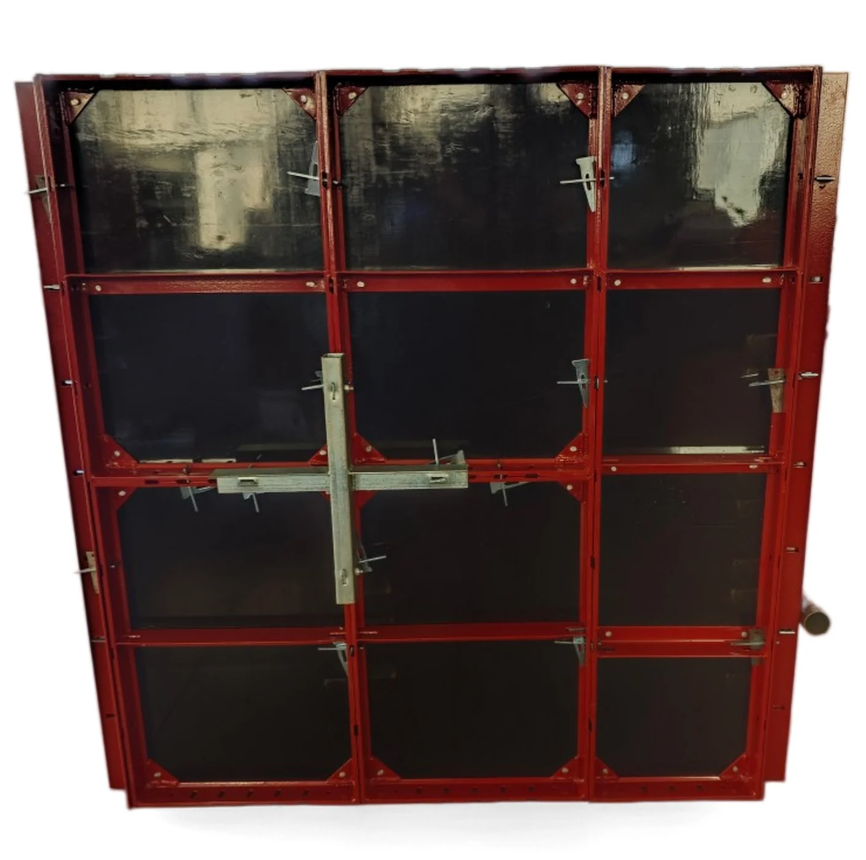
Steel frame formwork combines a steel supporting structure with a facing material that contacts the concrete. Our steel plywood formwork system uses high-strength steel frames and quality plywood panels to create reusable forms for walls, columns, slabs, and beams.
The steel frame provides structural support and durability, while the plywood facing provides the concrete-contact surface. This combination creates a practical balance between strength and replaceability. When the facing eventually requires maintenance, the plywood can be replaced without necessarily discarding the entire steel supporting frame.
Where Aluminum Formwork Has an Advantage
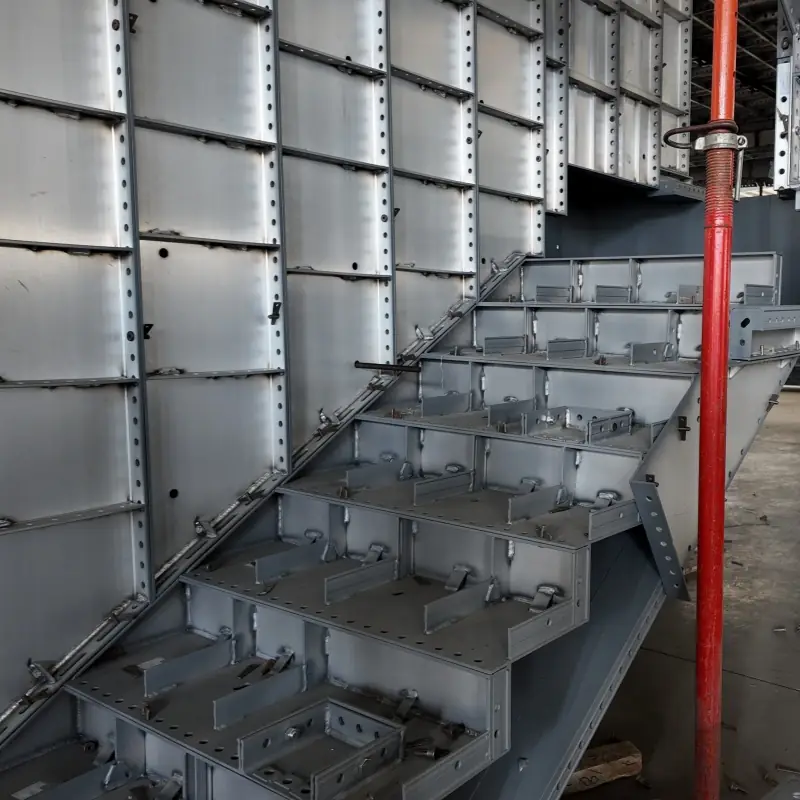
Aluminum formwork is often selected for projects where lightweight components and repetitive construction cycles are priorities. Aluminum has a lower density than steel, which can make individual panels easier to handle manually and may reduce the need for heavy lifting during certain operations.
This characteristic can be particularly useful for standardized building designs with repeated floor layouts. However, lower weight does not automatically make aluminum the better choice. Contractors still need to consider the project’s panel dimensions, connection system, concrete loads, handling procedures, storage requirements, and expected number of reuse cycles.
Compare Handling and Site Logistics
Handling requirements become increasingly important as a project grows. Formwork panels must move between work areas, floors, storage locations, or construction zones. The available workforce and lifting equipment therefore influence which system is most convenient.
We evaluate the complete handling process rather than considering panel weight in isolation. Steel frame formwork can be suitable where cranes or other lifting equipment are already integrated into site logistics. Aluminum can offer an advantage where reducing individual component weight simplifies manual handling. The best choice depends on the project’s specific workflow.
Consider Durability and Reuse
Large projects often require formwork to be reused many times. Durability therefore has a direct relationship with the long-term value of the system. Steel is known for its strength and robust performance, making a steel frame suitable for repeated assembly, dismantling, transportation, and reuse when properly handled and maintained.
Our system uses high-strength steel for the frame and quality plywood for the facing. The durable frame supports extended service, while the replaceable plywood facing simplifies maintenance. This design makes our reusable steel ply concrete forms practical for contractors looking to reuse the supporting structure across repeated concrete operations.
Look at Concrete Finish Requirements
The facing material has a major influence on the surface of the finished concrete. Plywood provides a defined contact surface and can help achieve a consistent finish when panels are properly maintained, aligned, and prepared before pouring.
For projects where appearance is important, contractors should consider the facing condition, joint treatment, release-agent application, panel alignment, and handling practices. Formwork material alone does not determine the final finish. Proper preparation and construction procedures remain essential to achieving consistent concrete surfaces.
Evaluate Maintenance and Replacement
Maintenance is another consideration when comparing steel and aluminum systems. Formwork can experience wear from repeated assembly, concrete contact, cleaning, storage, and transportation. Components that are difficult or expensive to repair may increase lifecycle costs over a long project.
We design our steel plywood system around the distinction between the durable frame and replaceable plywood facing. Instead of treating the entire panel as a single disposable unit, contractors can maintain the steel structure while replacing the facing when required. This can help extend equipment usability and make repeated projects more economical.
Match the System to Project Repetition
Repetition is particularly important for large-scale construction. A project with hundreds of similar wall sections or repeated floor layouts can benefit from standardized panels and predictable assembly sequences. The more consistent the geometry, the easier it becomes to establish an efficient formwork cycle.
For irregular structures, however, flexibility may matter more than maximum repetition. Contractors should assess how often panels can be reused without modification and how easily the system can accommodate changes in dimensions. Steel frame formwork can provide a practical option when durability and reusable modular components are priorities.
Make the Choice Through Lifecycle Value
The purchase price should not be the only basis for comparison. Contractors should consider handling labor, lifting requirements, maintenance, replacement parts, reuse potential, storage, and expected project duration. These factors can significantly influence the actual cost of a formwork system throughout its service life.
We recommend comparing systems according to the complete construction cycle. A lighter system may reduce manual handling, while a robust steel frame may provide value through durability and replaceable facing. The right decision depends on which characteristics address the project’s largest operational demands.
Selecting Formwork for Large-Scale Construction
Steel and aluminum formwork can both support efficient concrete construction when appropriately matched with project conditions. Aluminum can be attractive where lightweight handling and highly repetitive layouts are central priorities. Steel frame systems can be compelling where durability, structural robustness, reusable components, and replaceable facing are important.
At Rongze, we combine high-strength steel frames with quality plywood to provide reusable formwork for walls, columns, slabs, and beams. Our steel frame formwork is designed for fast assembly, stable support during concrete pouring, and consistent finishing. With a durable frame and replaceable plywood facing, we provide a practical solution for residential, commercial, and infrastructure projects.